




CiRA Reporter
CiRA Reporter

People
June 04, 2026
Unlocking the Future of Neurological Disease Treatment from a Hidden Brain Tissue
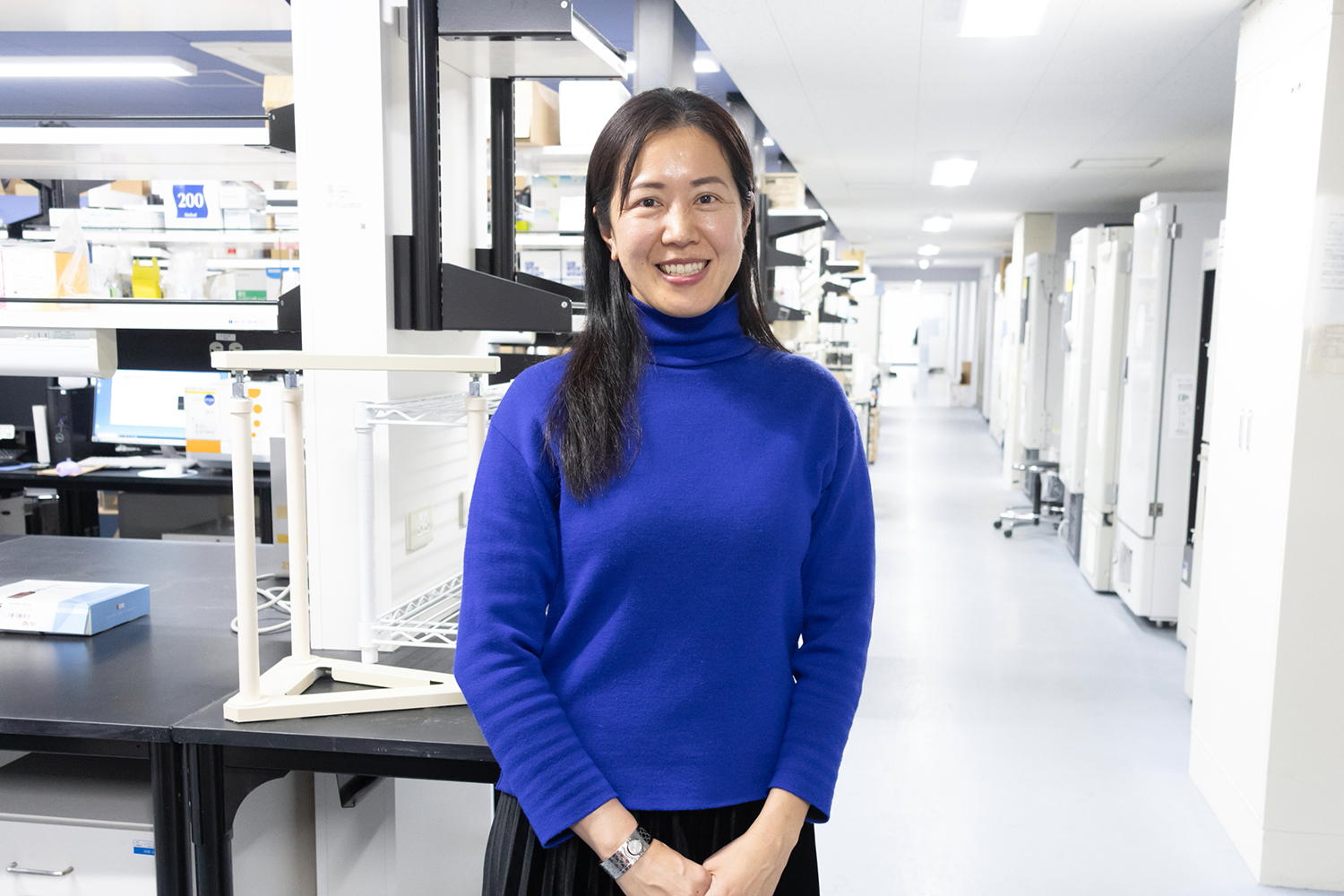
Sayako Katada
A biological rhythm that repeats on a roughly 24-hour cycle, regulated by the body’s internal clock., she now focuses her passion on the choroid plexus, a tissue that produces cerebrospinal fluid to protect the brain and spinal cord. Though small and long overlooked, this hidden yet vital structure may hold the key to new treatments for neurological diseases such as dementia. By applying iPS cell technology to uncover mechanisms of the brain that have previously been neglected, Dr. Katada aims to open new therapeutic frontiers.
Discovering the Potential of an Overlooked Essential Tissue
When Dr. Katada began her research career as an Assistant Professor at the Nara Institute of Science and Technology, one fundamental question arose: "Why are neural stem cells able to generate such diverse cell types that form the brain?" During development, neural stem cells gradually change their characteristics and differentiate into various cell types, including neurons※2)※2) Neuron
A cell that functions like an electrical cable, transmitting signals within the brain and to other parts of the body. and glial cells※3)※3) Glial Cell
Cells that support neuronal activity by maintaining the brain environment and providing metabolic support.. What triggers these switches, and where do they originate? Dr. Katada hypothesized that the key lies in the choroid plexus.
In experimental animals such as mice, the choroid plexus is an extremely small tissue. At the time, it attracted little attention, and only a handful of researchers worldwide studied it. "Because so few people study it, there is great potential for discovery. That made the choroid plexus especially appealing," says Dr. Katada.
Recreating the Real Brain in a World-Class Environment
At CiRA, Dr. Katada is focusing on choroid plexus and brain organoid research. Organoids are miniature, organ-like structures derived from pluripotent stem cells. While many existing brain organoids resemble the brain in appearance, they often fail to reproduce the brain’s intricate neural circuits. Moreover, little research has focused on how choroid plexus organoids and brain organoids influence each other’s maturation and function.
"Given the opportunity to join a world-class research institution, I want to give it my all. CiRA brings together the expertise and technology needed to generate highly refined brain and choroid plexus organoids."
With a strong framework for clinical collaboration, she aims not only to use iPS cells as a basic research tool, but also to translate discoveries directly into therapies.
Building a Team That Takes on Challenges with Confidence
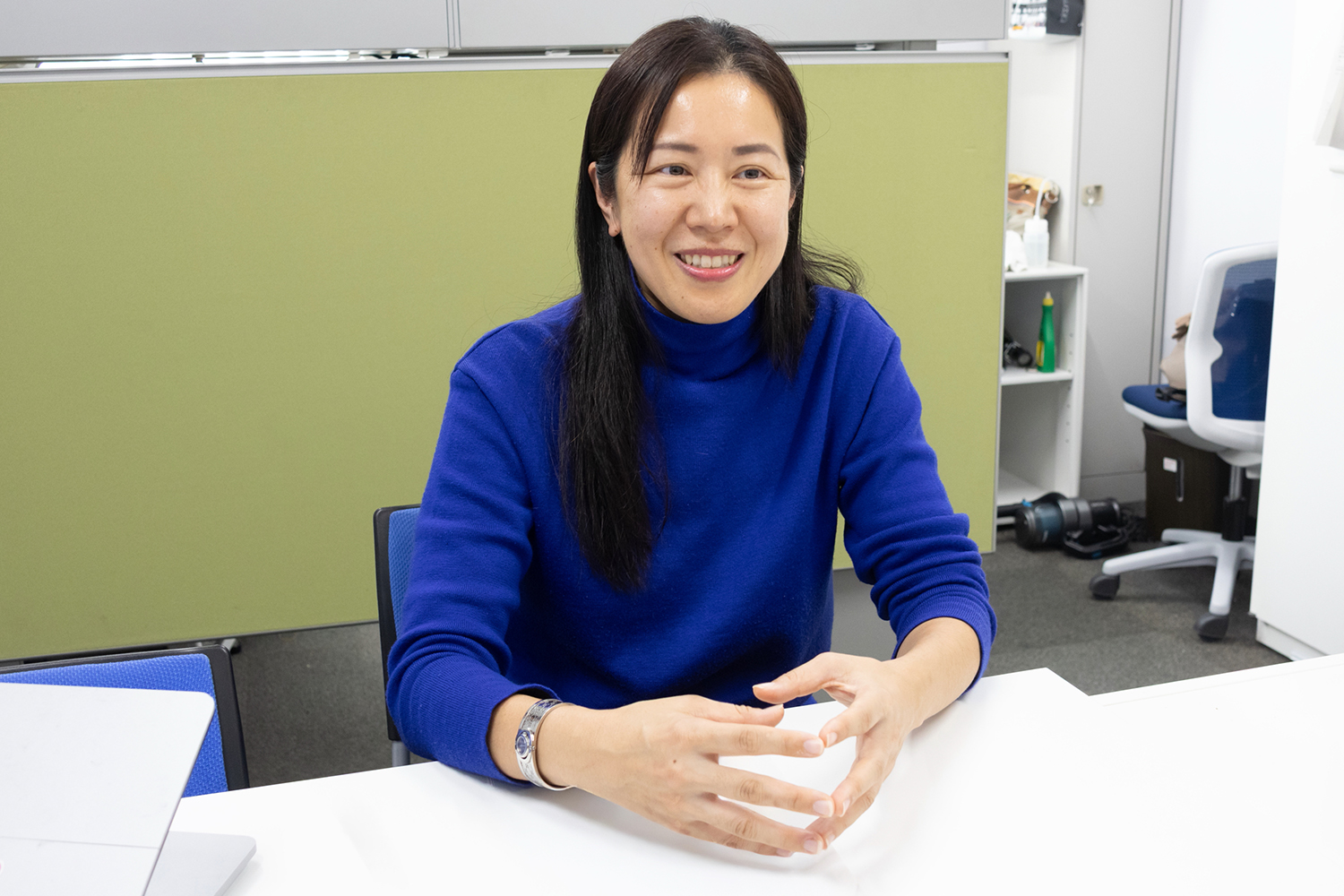
What kind of research team does she envision in her newly established laboratory? "People with diverse personalities and expertise are coming together. I want everyone to build on their strengths, inspire one another, and collaborate to generate new ideas," she says.
Dr. Katada emphasizes creating an environment where everyone can genuinely enjoy research. By sharing curiosity and the joy of discovery, while also providing support like a parent for members juggling their research, she aims to cultivate a workplace where people feel secure and supported.
"By respecting individual interests and circumstances and fostering an atmosphere where people can take on challenges without fear of failure, I want to build a lab where everyone can grow with confidence and enjoyment while enhancing the quality of our research."
A New Approach That Could Transform Brain Therapies
Through her work, Dr. Katada envisions the development of new therapies for neurological diseases such as dementia.
"The brain is an extremely complex organ with dense neural networks. Depending on the site of damage, cell transplantation or surgery may not be feasible. In contrast, the choroid plexus resides within the brain’s ventricles. In the future, recovery may be possible if we can selectively deliver substances with special functions—such as microRNAs※4)※4) MicroRNA
Small RNA molecules that bind to complementary messenger RNA (mRNA) sequences, suppressing translation or promoting mRNA degradation, thereby reducing protein synthesis.—through the cerebrospinal fluid produced by the choroid plexus to repair only damaged cells."
The choroid plexus also functions as a filter, preventing unwanted substances in the blood from entering the brain and cerebrospinal fluid. However, this function deteriorates with age. "If we can establish therapies to repair or replace this brain filter, we could apply such approaches to treating age-related cognitive decline, such as dementia and memory loss," Dr. Katada explains.
Although the path from basic research to patient care is long and requires perseverance, Dr. Katada is committed to steadily advancing translational research from fundamental science to clinical application. In the future she envisions, her work in the coming years will contribute to novel treatments for neurological disorders that harness the functions of the choroid plexus.
Glossary
※1) Circadian Rhythm
A biological rhythm that repeats on a roughly 24-hour cycle, regulated by the body’s internal clock.
※2) Neuron
A cell that functions like an electrical cable, transmitting signals within the brain and to other parts of the body.
※3) Glial Cell
Cells that support neuronal activity by maintaining the brain environment and providing metabolic support.
※4) MicroRNA
Small RNA molecules that bind to complementary messenger RNA (mRNA) sequences, suppressing translation or promoting mRNA degradation, thereby reducing protein synthesis.
-
Interviewed and written by Chiaki Yoshino
A Kyoto-based freelance writer and lecturer. With approximately ten years of experience in laboratory testing and experimental work at companies, universities, and research institutes, she is an active science writer with a deep understanding of research at the sites of discoveries. She has produced more than 300 works, including interviews, press releases, owned media content, and books.