




CiRA Reporter
CiRA Reporter

Focus
June 11, 2026
Challenging the World with iPS Cell-Derived Immune Cell Therapies
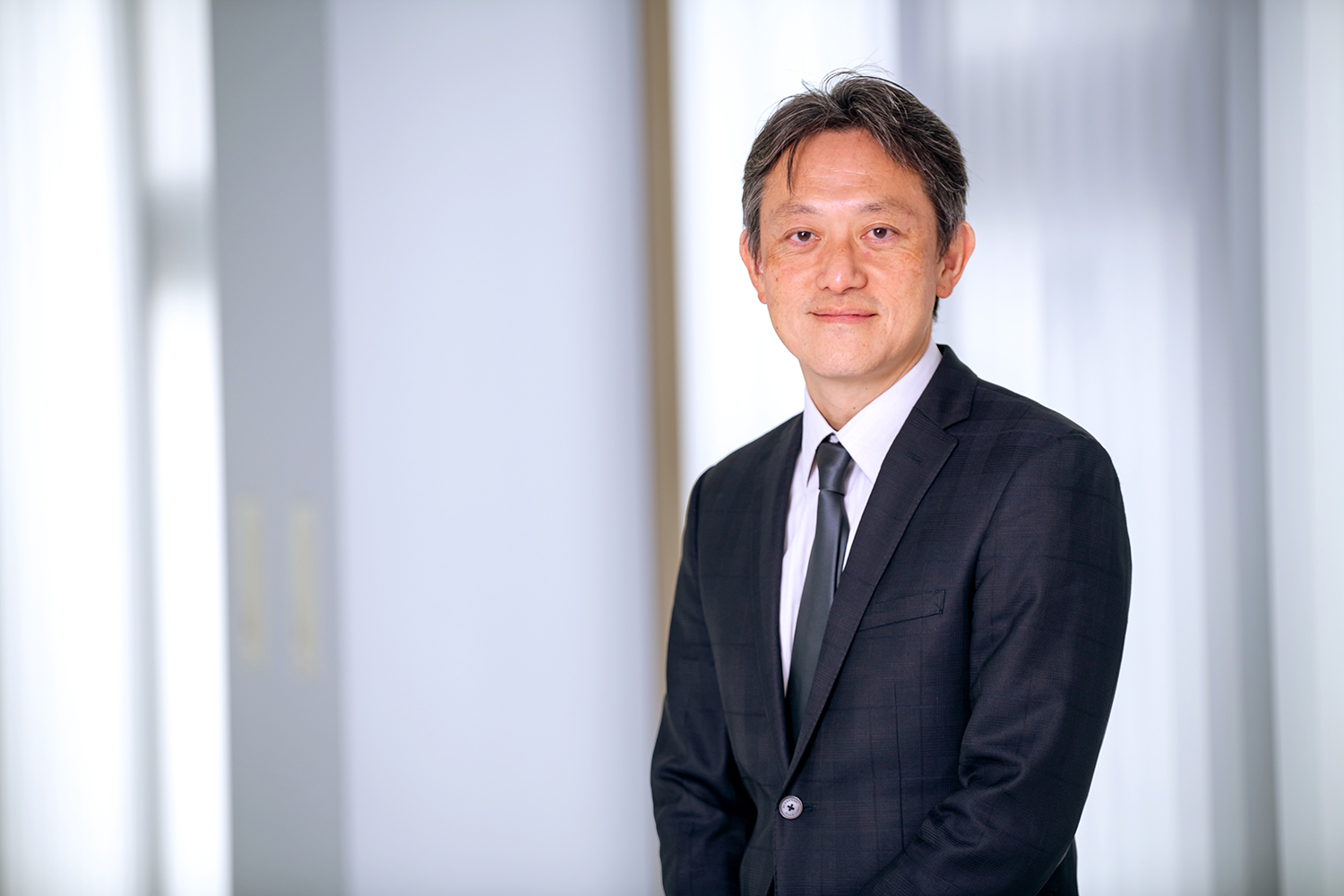
Professor Shin Kaneko
Board Director(※), and Scientific Advisor,
Shinobi Therapeutics Inc.
Why did you decide to launch a startup company?
Around 2013, I applied for large-scale project grants several times to advance the research and development of cancer immunotherapies using iPS cell-derived T cells※1)※1) T cells
A type of white blood cell responsible for immunity. They identify and attack foreign substances in the body (such as viruses, bacteria, and cancer cells) and regulate the overall immune response.. Unfortunately, none of these applications were successful, and we also received no collaboration offers from pharmaceutical companies. I realized that we would never reach clinical application without sufficient funding and concluded that we needed to build our own clinical pipeline. These circumstances led me to establish a startup company.
What challenges did you face immediately after launching the startup?
The first step was founding the company in 2013 together with fellow researchers who were also working on T cell research. Venture capitalists provided advice on funding and operations, and I remember feeling relieved that we might finally secure research funding.
However, we attempted to build a clinically oriented development pipeline relying solely on collaborations with academia, but soon realized how difficult it was to create development processes comparable to those of pharmaceutical companies when both the research environment and the operational workforce resided entirely within academia. Responsibilities and leadership were unclear, and many academic researchers, including myself, lacked practical knowledge of commercialization.
Meanwhile, our research gradually gained momentum. We had been pursuing autologous iPS cell-derived T cell therapy, which attacks cancer using T cells generated from a patient’s own cells via iPS cells. Subsequently, we published a paper demonstrating an allogeneic iPS cell-derived T cell therapy, in which iPS cells created from healthy donors with cell types less prone to immune rejection were engineered with cancer-specific sensors and used to generate T cells that could treat many patients. After that, our work began to receive grant support and an increasing number of collaboration proposals from industry.
How did you build an organizational structure to overcome these challenges?
After many twists and turns, we established Thyas Co., Ltd. in 2015 and proceeded with the autologous iPS cell-derived T cell therapy approach. However, personalized medicine inevitably requires more time and cost, and therapeutic effects can vary, thus making it difficult to attract sufficient funding. I also felt that an academia-only structure would not be sufficient.
A turning point was our encounter with Kyoto University Innovation Capital Co., Ltd. (Kyoto-iCAP). With Kyoto-iCAP serving as the lead venture capitalist, providing investment support and assisting in the selection of a new CEO, the company’s organizational foundation gradually took shape. Around the same time, we were invited to collaborate under T-CiRA―a ten-year joint research program launched by CiRA and Takeda in 2016―which led us to pursue allogeneic iPS cell-derived T cell therapy in parallel. The last thing we want is for a therapy to be developed through clinical trials in the United States and then never make its way back to patients in Japan.
Why did you decide to establish a base in San Francisco?
Although we had generated concrete research data and were ready to move into non-clinical studies at Thyas, we again faced a funding shortage. At that point, U.S. venture capital investors approached us, saying they would seriously consider an investment if we were prepared to operate in the United States.
We decided to merge with a U.S. biotech startup possessing immunoregulatory technologies and became a U.S.-registered company, Thyas Inc. We then welcomed a trustworthy new CEO and renamed the company Shinobi Therapeutics, Inc. By establishing bases in San Francisco and Japan, we built a full-fledged immune cell therapy startup aiming for the global market.
What technologies is Shinobi Therapeutics aiming to implement in terms of real-world applications?
Operating a startup company in the U.S. requires strategies on par with those of major pharmaceutical companies, rather than targeting niche markets. That strategy led us to focus on allogeneic iPS cell-derived T cell therapy that could be broadly available to many patients.
Although we can cover about 40% of the Japanese population with iPS cell stocks※2)※2) iPS Cell Stock
iPS cells produced by the CiRA Foundation at its Facility for iPS Cell Therapy using somatic cells, such as blood, donated by volunteers. After undergoing various tests, these iPS cells are made ready for clinical use. The CiRA Foundation has, over the years, produced an iPS cell stock compatible with approximately 40% of the Japanese population and provides it to research institutions and companies in Japan and abroad. through this concept, that coverage is far too limited on a global scale. To address this, we used genome editing to eliminate genes responsible for immune rejection, enabling the generation of iPS cell-derived T cells that can be used in virtually all patients. Animal studies have confirmed that these cells are less likely to be rejected but possess strong anti-tumor effects.
Shinobi Therapeutics aims to manufacture and stock these cell products in advance so they are readily available for administration when needed. While the T-CiRA collaboration also focused on allogeneic iPS cell-derived T cell therapy, we successfully delineated distinct research roles between Shinobi Therapeutics and T-CiRA.
Although Shinobi Therapeutics has a U.S. presence, company-led clinical trials are planned for Japan. Given the substantial support we have received in Japan, we believe it is crucial for the treatments we develop to return.
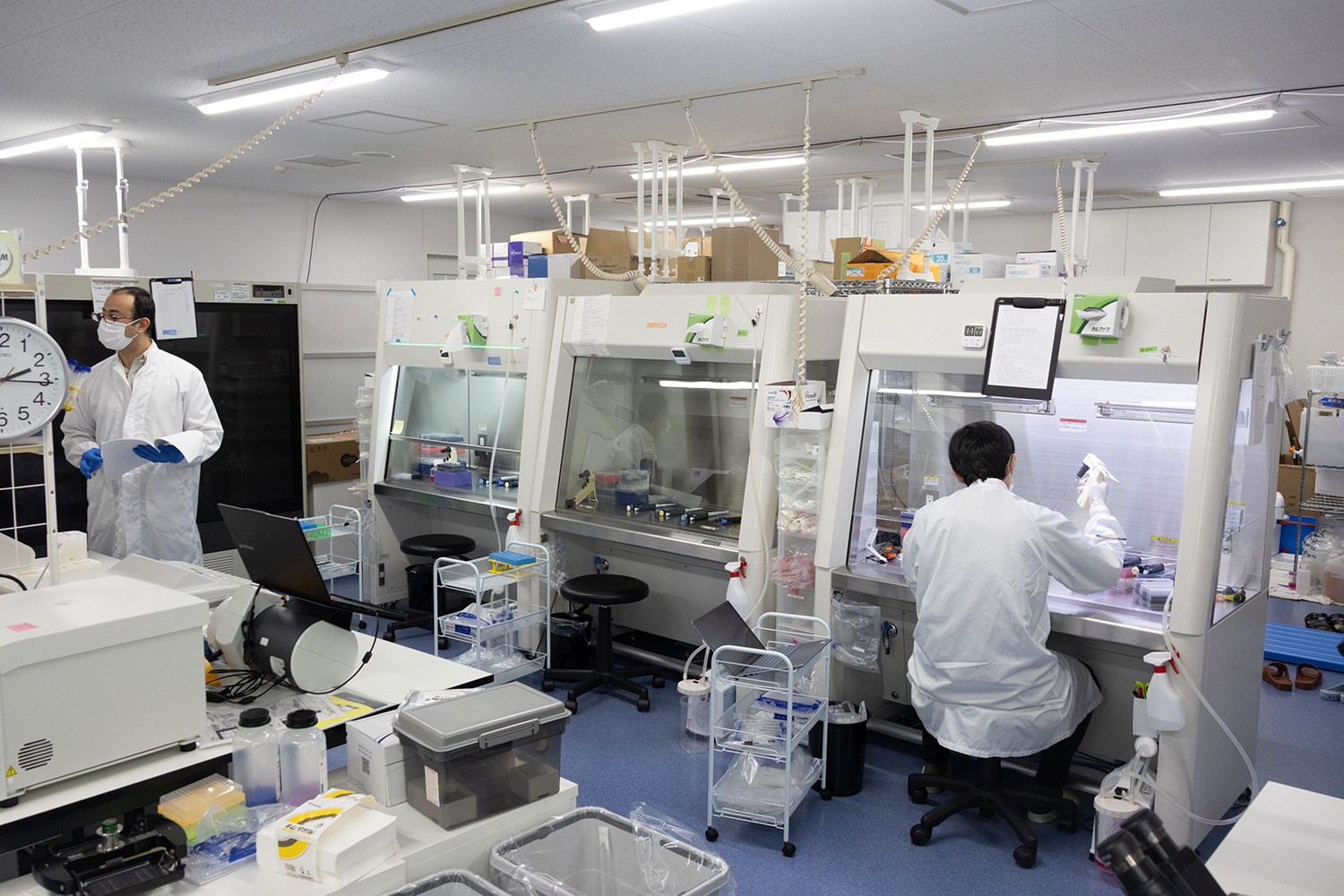
Cell Culture Facility of Shinobi Therapeutics Inc. (Kyoto, Japan)
What is your role in the startup?
At Thyas, Kyoto-iCAP advised me that I should serve not only as a founder but also as an outside director, and I took on that role. They explained that it was important for the company to have a scientist like me on its board of directors, as it would influence how the company is perceived. At Shinobi Therapeutics, I also serve on the Board of Directors and Scientific Advisory Board, providing scientific guidance while leaving management decisions to the executive team. In accordance with Kyoto University’s external employment regulations(※), I limit myself to only a few hours per week for startup-related work.
How do you balance research and startup activities, and what are the challenges and rewards?
I believe the process of moving from research to translation and ultimately to real-world applications is fundamentally the same, whether through collaborative research or startup activities. In pharmaceutical collaborations, companies typically take over development at later stages with their experience and exit strategies. In startups, however, similar paths are taken while facing uncertainties along the way, which can be nerve-wracking from the sidelines.
One piece of advice from a venture capitalist stayed with me: "The key to successful university spin-offs is how well the founding professors can let go." In other words, independent and sound management decisions are essential. I therefore entrust management to the leadership team and limit my involvement to providing input as a director only when necessary. While balancing research and startup work is not overly difficult, there is a unique tension from being in an observational role. Of course, the way researchers engage with their startups varies. There are those who, as founders, immerse themselves deeply in the day-to-day operations and work hand-in-hand with the team to drive the company forward. I believe that is also a valid approach.
The greatest reward is witnessing our research advances progress toward clinical application. Seeing basic research translate into therapies delivered to patients is, to me, the greatest fulfillment of balancing research and startup work.
What strengths have emerged from having bases in both Japan and the United States?
Working alongside American staff has been highly educational, as many have extensive practical experience. We also benefit from a seasoned management team and globally renowned researchers serving on our scientific advisory board. Whereas genome editing is primarily conducted in San Francisco, drawing on the strengths of the merged U.S. startup, cell manufacturing and differentiation process development are handled in Japan, where manufacturing expertise is world-class.
Maintaining the Kyoto base is essential. Consolidating entirely in San Francisco would introduce logistical and time-zone challenges. Moreover, Japan offers significant advantages in lower research costs.
What are your plans for the future?
At Shinobi Therapeutics, we are advancing the development of allogeneic iPS cell-derived T cell therapies for solid tumors, including liver cancer, liver metastases from colorectal cancer, and lung cancer. We plan to initiate clinical trials in Japan in fiscal year 2026.
We are also developing iPS cell-derived NK cell※3)※3) NK Cells
A type of cell involved in the immune system. NK cells do not exhibit antigen-specific immune responses but carry out immune responses (innate immunity) that non-specifically damage cells instead. therapies aimed at suppressing autoimmune diseases, with clinical trials likewise planned in Japan in fiscal year 2026.
At the same time, we remain committed to the originality of autologous iPS cell-derived T cell therapy. In a collaboration between Panasonic Holdings Corporation, Shinobi Therapeutics, the CiRA Foundation, and CiRA, we are developing strategies to rejuvenate exhausted T cells from cancer patients via iPS cells and generate personalized therapeutic cells. We are currently developing a compact automated culture device called My T-Server, which enables the simple production of regenerated T-cell preparations for cancer treatment using T cells derived from the patient’s blood.
(※) Note: According to Kyoto University guidelines on external employment, faculty members may serve as officers of companies leveraging their research findings with university approval, provided that such activities do not exceed eight hours per week.
Glossary
※1) T cells
A type of white blood cell responsible for immunity. They identify and attack foreign substances in the body (such as viruses, bacteria, and cancer cells) and regulate the overall immune response.
※2) iPS Cell Stock
iPS cells produced by the CiRA Foundation at its Facility for iPS Cell Therapy using somatic cells, such as blood, donated by volunteers. After undergoing various tests, these iPS cells are made ready for clinical use. The CiRA Foundation has, over the years, produced an iPS cell stock compatible with approximately 40% of the Japanese population and provides it to research institutions and companies in Japan and abroad.
※3) NK Cells
A type of cell involved in the immune system. NK cells do not exhibit antigen-specific immune responses but carry out immune responses (innate immunity) that non-specifically damage cells instead.
-
Interviewed and written by Yoko Miyake
Science Communicator, CiRA International Public Communications Office
(Translation: Kelvin Hui Ph.D., CiRA Research Promoting Office)