



CiRA Reporter
CiRA Reporter

Internship
December 05, 2025
CiRA Research Internship Program Student Interview vol. 15
-Captivated by Two Weeks of Thymus Research Filled with Fascination and Passion-
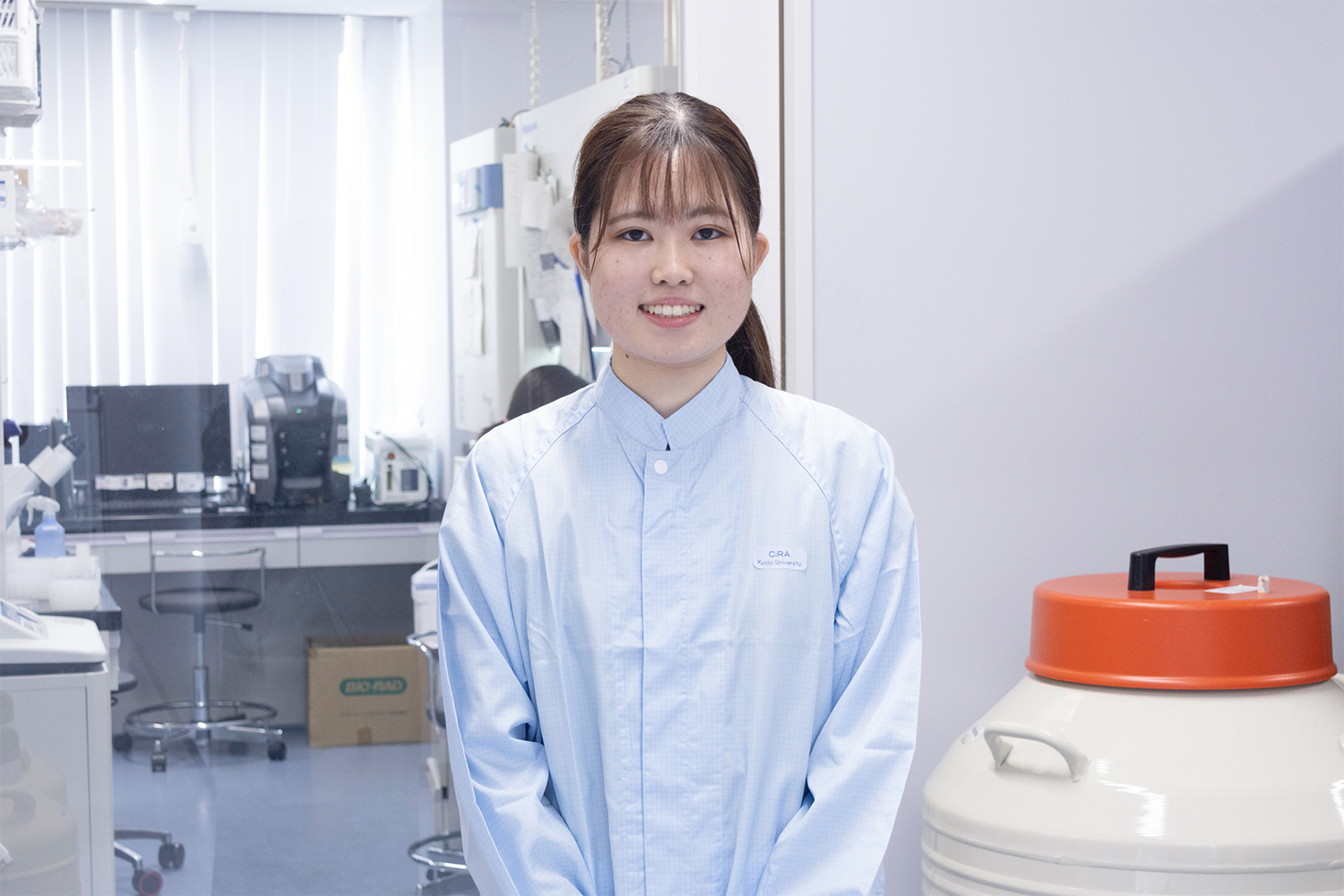
Rina Yokoyama (Waseda University) in the anteroom
for the cell culture room
Rina Yokoyama is a third-year student in the Department of Biology, School of Education at Waseda University. From August 25 to September 5, 2025, she participated in a two-week internship in the laboratory of Professor Yoko Hamazaki (Department of Life Science Frontiers). We spoke with her about her passion for T cells※1)※1) T Cells
A type of lymphocyte that plays a role in immunity. They identify and eliminate cancerous or infected cells. Each T cell recognizes a specific target. Types include "killer T cells" and "helper T cells." and the thymus※2)※2) Thymus
An organ that educates T cells to function properly. It grows largest during puberty and gradually shrinks afterward., as well as her experiences during the CiRA Research Internship Program.
What sparked your interest in biology?
It started in fourth grade when I saw a frog dissection. During a middle school visit, I saw a senior student insert a straw into a frog’s trachea and watched its lungs inflate. I was amazed by how animal bodies work. Since then, I have enjoyed studying biology.
In middle and high school, I was interested in the economic impact of hay fever, which led me to both botany and immunology. By my first year of university, I was completely hooked on immunology.
Why did you choose to intern in the Hamazaki Lab?
I have long been fascinated by the complexity of the immune system—how it protects us but can also attack us when it goes awry. I especially love T cells, and the Hamazaki Lab studies the thymus, the organ involved in T cell differentiation. The thymus is full of mysteries. For example, it can regenerate when removed in childhood, but by around age 40, it mostly becomes fatty tissue. I wanted to explore basic research into this fascinating organ, and my university professor introduced me to Professor Hamazaki. After visiting the lab during spring break, I decided to join the internship.
What did you do during the internship?
I mainly cultured iPS cells and performed experiments to generate thymic epithelial cells (iTECs) from iPS cells. On my first day, a paper by Assistant Professor Yann Pretemar(CiRA News, August 25, 2025)from the Hamazaki Lab was published, describing a successful method to produce mature iTECs from human iPS cells. I got to try this new technique myself.
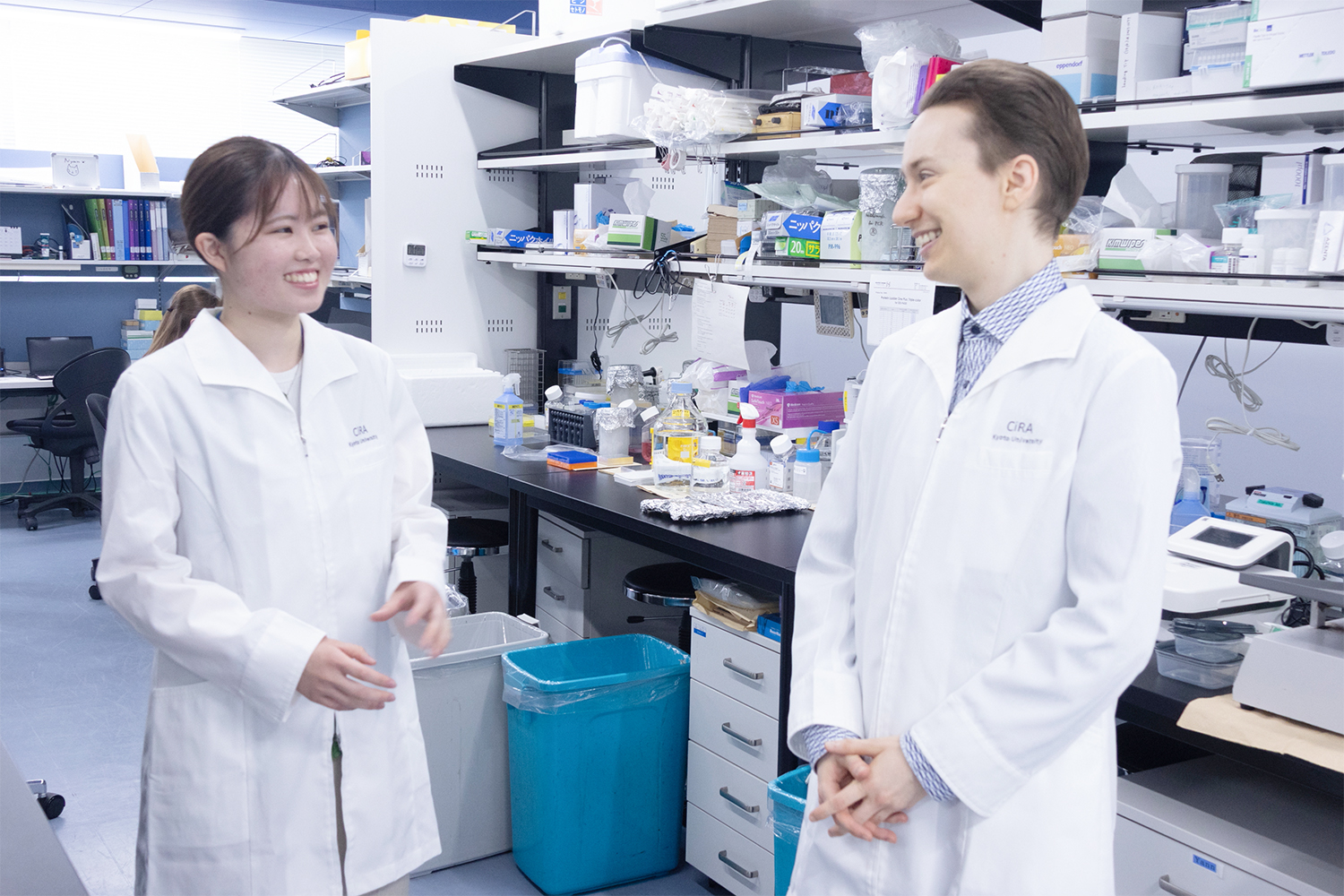
Yokoyama talking with Assistant Professor Yann Pretemar (right)
at the CiRA Open Lab
Observing the cells daily was emotionally moving—on day 3, I felt discouraged because the cell count dropped dramatically, but they recovered by day 7, so I was relieved. The morphological changes in iPS cells were exciting: they formed round colonies, then extended spike-like projections like limbs—the dynamic transformations were fascinating!
I also learned cell staining techniques. With staining, iTECs appear red and surrounding cells green. My favorite part was the beautiful overlapping red and green images under the microscope.

Yokoyama showing an optical microscope image
What left a strong impression from the internship?
I was overwhelmed by the English-speaking environment. Since there were international students, explanations were given in both Japanese and English, and protocols were in English. Even during breaks, lab members spoke fluent English. I was a bit frustrated that I could not express myself well. Hearing lively discussions in English during research presentations made me realize I need to develop my language skills—not just scientific knowledge—to communicate effectively in science.
I also joined the "Research Networking Salon," a networking event within Kyoto University’s biomedical field. Researchers from diverse areas, including neuroscience, medical sociology, and botany, exchanged ideas. I felt the openness of this university. It was a great opportunity to meet students and early-career researchers from various fields, so I am glad I attended.
Has your career goal changed through the internship?
I have always been interested in studying immunology, especially T cells. I have not decided on a specific research topic, but seeing the excitement around thymus research made me want to be part of it. The whole lab is working together with a "let’s do it now" spirit. That momentum makes it feel like both basic and applied thymus research could rapidly advance. I feel like I am witnessing the moment when the mysteries of the thymus are being unraveled—it is an exciting time!
What are your future goals?
Everyone was cheerful and communicated openly, regardless of their academic level or position. Not only Yan-san, but also students and technicians guided me. There was a strong sense of unity: "Let’s all do thymus research together!" Early morning discussions were common, and the lab had a fun and open vibe.
What are your future goals?
I am not sure if I am suited for research yet, but I love immunology, T cells, and now thymus research too. I definitely plan to pursue a master’s degree, and if I continue to enjoy research, I will likely go on to a Ph.D. I would be happy to keep doing research fueled by my passion.
-
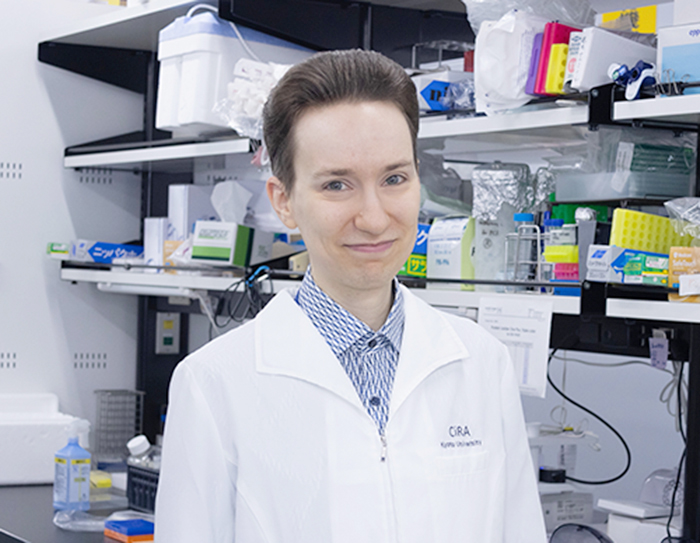
Comments from
Assistant Professor Yann Pretemer
Rina was truly outstanding. Even after experiments, she actively asked questions like "Why does this happen?" and "What exactly does this reagent do?" Her proactive attitude toward learning was impressive. It made me want to teach her more and help her grow as a young researcher. I hope she keeps that curiosity and enthusiasm. As long as the seed of curiosity exists, we will continue to nurture it like watering a plant.
Glossary
※1) T Cells
A type of lymphocyte that plays a role in immunity. They identify and eliminate cancerous or infected cells. Each T cell recognizes a specific target. Types include "killer T cells" and "helper T cells."
※2) Thymus
An organ that educates T cells to function properly. It grows largest during puberty and gradually shrinks afterward.
-
Interviewed and written by Chiaki Yoshino
A Kyoto-based freelance writer and instructor. With about 10 years of experience in testing and experimentation at companies, universities, and research institutes, she now works as a science writer. She has written over 300 pieces, including interviews, press releases, owned media, and books.
(Translation: Kelvin Hui Ph.D., CiRA Research Promoting Office)