





CiRA Reporter
CiRA Reporter

Focus
June 15, 2026
The Current State of Kyoto University Spin-Off Startups
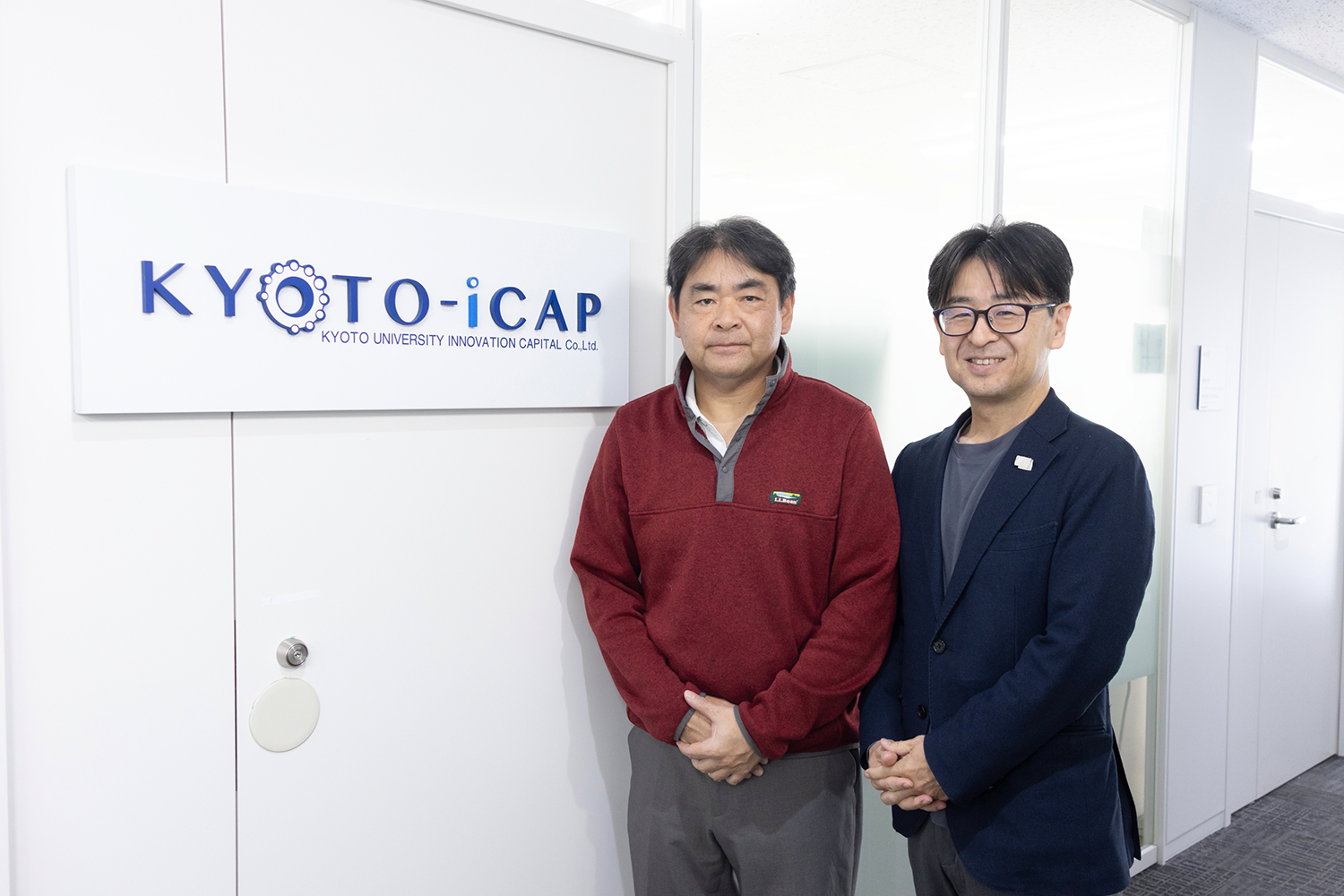
(From left) Osami Kono and Hiroyuki Ueno
in front of the Kyoto-iCAP office on
Kyoto University's Yoshida Campus.
How many Kyoto University spin-off startups are there, and what are their main characteristics?
Kono: Including companies in which alumni are involved in management, there are currently approximately 460 companies. If we use a narrower definition―startups founded directly based on research at Kyoto University―we estimate there are about 100 to 150 companies. Of these, Kyoto-iCAP is currently investing in 73.
In terms of technology fields, roughly half are in healthcare and life sciences, such as drug discovery, regenerative medicine, and medical devices. Many of these originate from research conducted at the School of Medicine or CiRA. Another major characteristic is Kyoto University’s traditional strength in manufacturing-oriented fields such as mechanical engineering, materials science, and energy. As a result, there are many technically unique startups, including those focused on nuclear fusion and perovskite solar cells※1)※1) Perovskite Solar Cells
Next-generation solar cells that use perovskite-structured materials as the light-absorbing layer. They are expected to offer low cost, light weight, flexibility, and high efficiency..
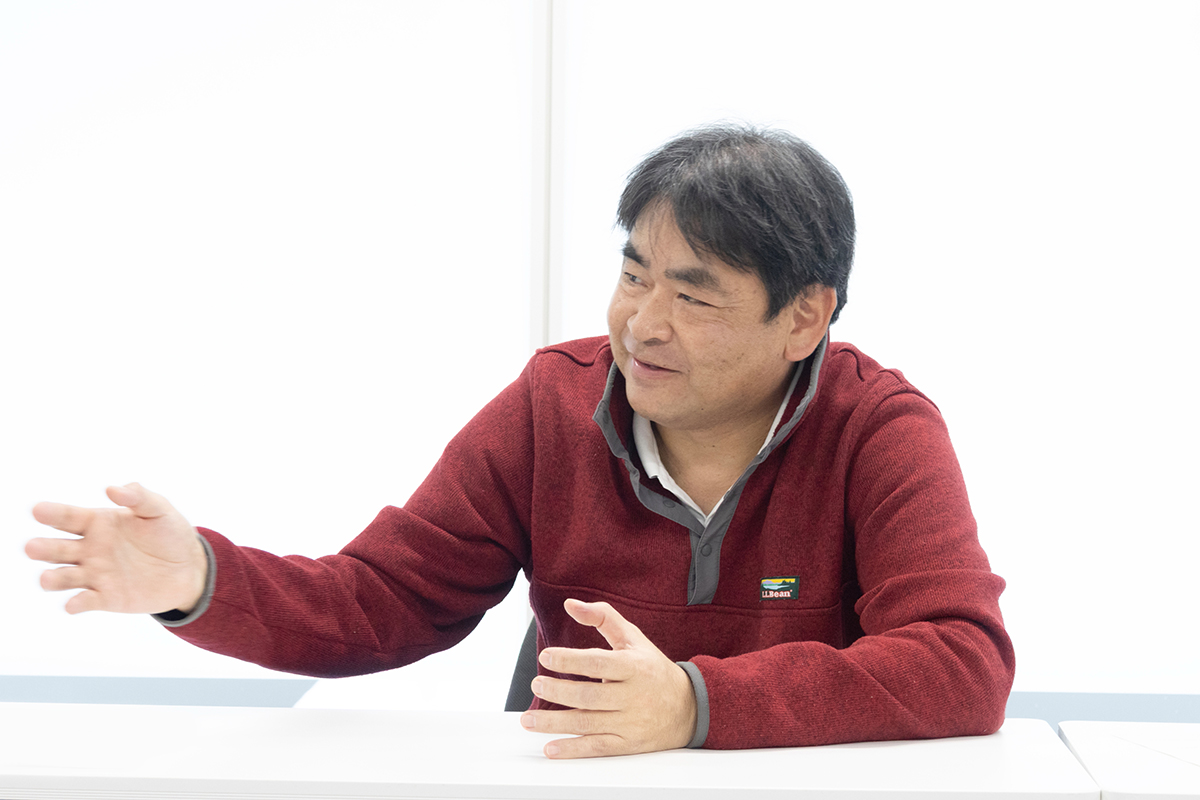
Osami Kono
Why are university spin-off startups necessary in the first place?
Ueno: Until about 20 years ago, large corporations were relatively accessible partners when attempting to bring academic research to the real world. Many universities licensed their patents to large companies, and those companies were generally more willing to take risks than they are today.
However, as technologies have become more sophisticated—iPS cell research is a prime example—it now takes a tremendous amount of time and capital investment to bring basic science to a commercially viable level. As the risks borne by large companies increased, their stance shifted toward getting involved only when development had sufficiently progressed.
In drug discovery, a well-known gap exists between fundamental research and clinical application, often referred to as the "valley of death," where commercialization is hindered by funding and talent shortages. Large corporations have become less willing and able to bridge this gap. Today, university spin-offs and VC firms play a crucial role in filling it. These partnerships advance academic seeds through non-clinical and clinical stages to a level where companies can make business decisions, after which large corporations may pursue licensing or partnerships. Over the past decade, this has become a global standard.
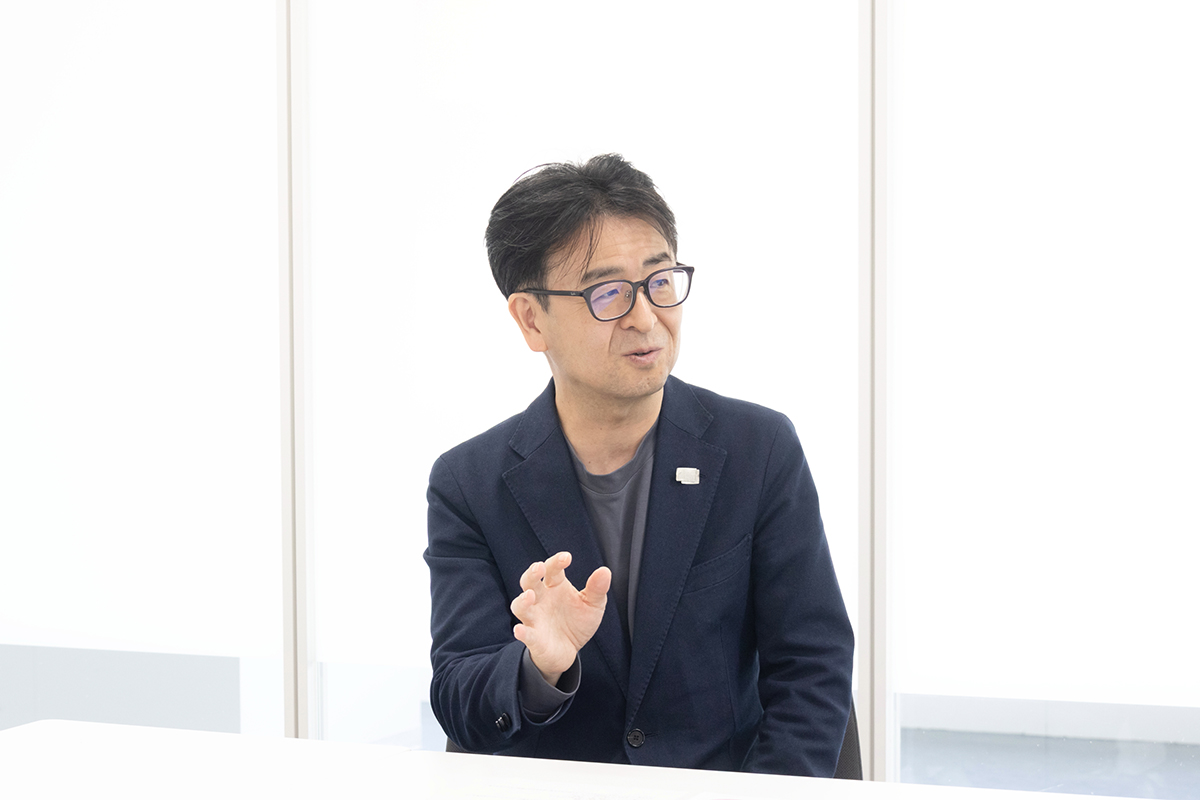
Hiroyuki Ueno
Kono: University spin-offs offer two major advantages. First, researchers can retain leadership and decide R&D directions as well as the content of products and services. While research directions are often influenced by corporate strategy in collaborations with large companies, startups are better for researchers to reflect their original vision.
Second, successful startups can generate substantial returns for universities through patent revenues or equity exits, enabling those funds to be reinvested into research. This approach enables the building of a sustainable innovation ecosystem.
How are Kyoto University spin-offs typically launched?
Kono: The fundamental prerequisite is world-class research capable of leading the globe―an area where Kyoto University has long excelled.
At the same time, there are challenges specific to Kyoto University. Under university regulations, it is extremely difficult for faculty members to remain at the university while serving as company executives. As a result, startups must recruit CEOs externally. Because it is not easy for researchers to find capable business leaders, Kyoto-iCAP operates a member organization that matches researchers with potential executives.
Kyoto University has also implemented several measures to strengthen startup creation. One is the "gap fund," which bridges basic research and startup formation. While most public research funding supports work up to publication, launching a company requires additional experiments, validation that does not result in papers, and the hiring of business personnel. Kyoto University operates multiple programs that provide grants ranging from several million to tens of millions of yen to projects aiming to establish startups, selecting more than ten projects each year.
Office space and rental laboratories for startup companies are also essential, and such facilities are available across Kyoto University’s campuses. Moreover, the university provides entrepreneurship education to students.
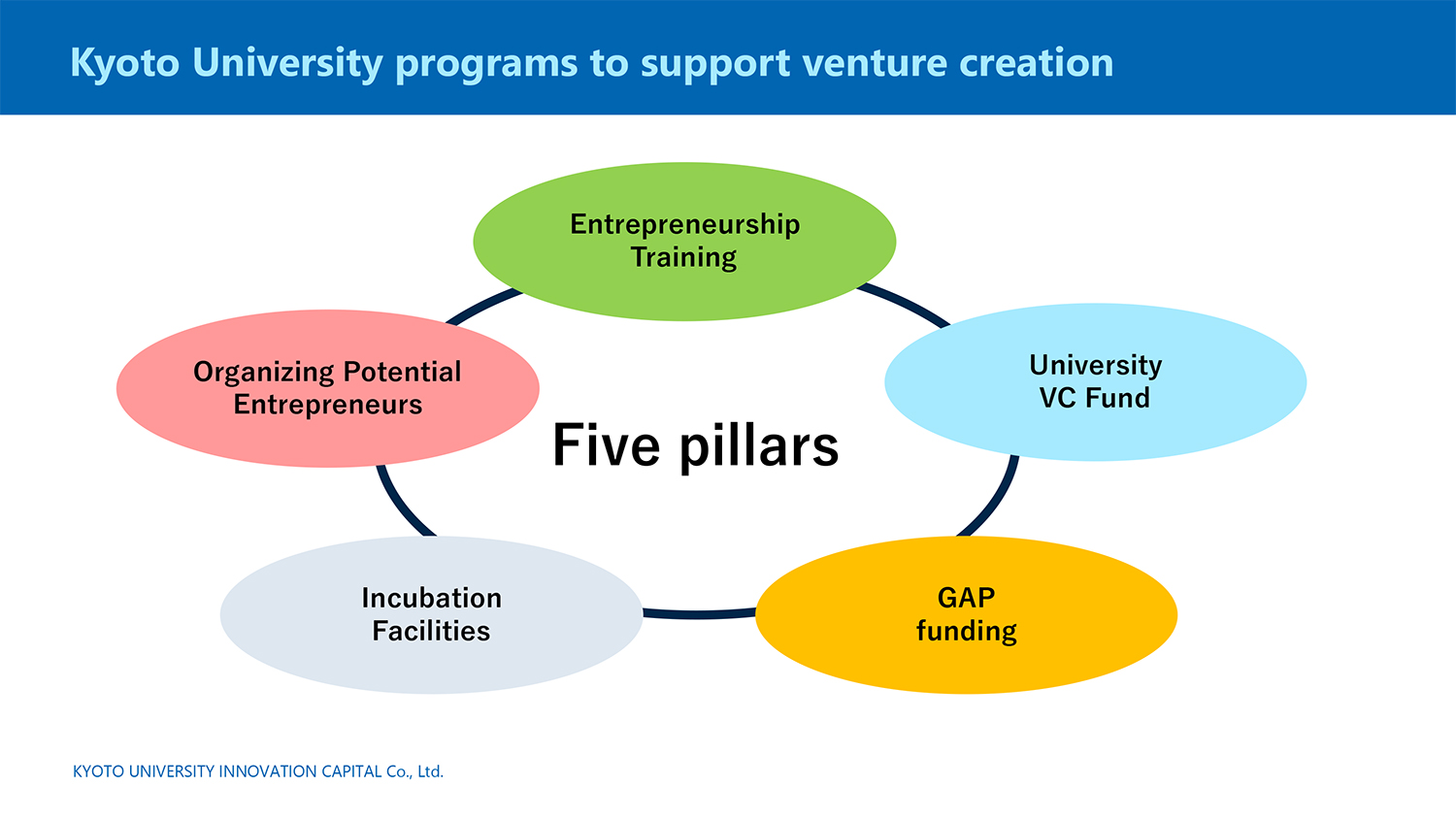
Historically, compared to other top universities, Kyoto University was not considered particularly startup-friendly. Its strong emphasis on basic research fostered a culture in which researchers were discouraged from involvement in profit-making activities. As a result, although many other universities have spin-offs that have gone public, only one startup originating from Kyoto University has achieved an Initial Public Offering to date. This difference is precisely why organizations like Kyoto-iCAP see it as their role to support startup creation.
How does Kyoto-iCAP support Kyoto University spin-off startups?
Kono: One of Kyoto-iCAP’s defining features is that we support startups even before they are formally established. Our investment professionals continuously monitor research projects within the university and, once we identify promising technologies, begin visiting laboratories to work with researchers on business planning and executive recruitment.
Another key feature is our proactive investment in seed and early-stage※2)※2) Seed / Early-Stage
The earliest phases of startup development, including the period immediately before and after founding. startups. In deep tech※3)※3) Deep Tech
Fields that leverage scientific breakthroughs or advanced technologies originating from universities or research institutions. fields, early stages carry extremely high risks, discouraging many private VCs. Kyoto-iCAP deliberately steps into this phase and prioritizes deploying substantial capital. In fact, approximately 80% of our portfolio consists of seed and early-stage investments. Of course, not every company succeeds.
Ueno: Over the past decade, Kyoto-iCAP has invested in 73 companies, nine of which have reached enterprise valuations exceeding JPY 10 billion. Notably, six of those nine companies were supported by Kyoto-iCAP from before their formal founding.
Innovation is often said to require people, technology, and capital. We consciously structure our support around these three elements. Facilities are also critically important, and in this respect, Kyoto University is exceptionally well equipped. CiRA, Kyoto-iCAP, Kyoto University Hospital (where clinical trials can be conducted), the Institute for Advancement of Clinical and Translational Science (iACT), and cell manufacturing facilities are all located within approximately a one-kilometer radius. This density creates a highly favorable environment.
Although the road to this point involved many setbacks and lessons learned, over the past decade, we have witnessed the formation of a new startup ecosystem within Kyoto University―one that is now among the world’s strongest and most comprehensive.
To summarize the process, what we do is: (1) identify promising technologies, (2) work with researchers to develop business and funding plans, (3) recruit suitable executives and match them with researchers, and (4) bring in investors beyond Kyoto-iCAP to expand the funding network. That is essentially our role.
What innovations has Kyoto-iCAP introduced over time?
Ueno: In Tokyo, about 8% of the workforce is involved in startup-related activities, while the figure is closer to 1% for Kyoto. Entrepreneurs and investors are heavily concentrated in Tokyo. When Kyoto-iCAP was established in 2016, a major challenge was building networks with Tokyo-based investors.
By steadily cultivating relationships and expanding our financial networks, Kyoto-iCAP promoted co-investment-based fundraising. To date, we have invested JPY 16.7 billion in 73 companies, and total funding involving our portfolio companies―including private VCs―has reached approximately JPY 50 billion. Our model has matured to the point where every JPY 100 million invested by Kyoto-iCAP attracts roughly JPY 200 million in private capital. As a result, private VCs increasingly tell us that investments involving Kyoto-iCAP feel trustworthy. I believe one of our greatest achievements has been building trust as a venture capital firm that supports university-originated deep-tech startups.
What challenges do university spin-offs commonly face?
Kono: First, because Kyoto University’s technologies are often highly unique, it can take time for investors to understand their value fully. Even after Kyoto-iCAP makes an initial investment, expanding the circle of co-investors is not easy. Some startups require billions of yen over long developmental timelines.
Second, maintaining healthy relationships between researchers and management teams is crucial. Academic research and business operations differ significantly in mindset. Researchers may find management decisions difficult to comprehend and vice versa. Building trust—where researchers entrust business decisions to management—is essential but notoriously difficult, and conflicts sometimes lead to executive turnover.
What strengths characterize CiRA-originated startups?
Kono: iPS cell technology has exceptional potential to deliver fundamentally curative therapies, particularly for rare and intractable diseases. CiRA also provides strong research support, including intellectual property protection.
Ueno: CiRA’s role as a global hub for cutting-edge iPS cell research is a major strength. Because CiRA attracts world-class talent and information, the latest insights continuously flow into CiRA-originated startups. This hub function provides a powerful tailwind. In addition, while U.S. investments in iPS cell-derived immune cells often concentrate on cancer, CiRA-originated startups have actively pursued applications in non-cancer applications and rare diseases from an early stage.
What do you hope to see from university spin-offs in the future?
Kono: Japan has yet to produce a truly world-changing product from a university spin-off. We hope to see breakthroughs comparable to Opdivo, the immune checkpoint inhibitor developed by Professor Tasuku Honjo of Kyoto University. Such breakthroughs remain a broader national aspiration.
Do you have a message for researchers considering entrepreneurship?
Kono: Kyoto University now offers one of the most supportive environments for launching startups among Japanese universities. I encourage researchers to take on the challenge.
Ueno: Kyoto University provides an environment well-suited to world-leading research, which is indispensable for creating startups. Through startups, I hope researchers will build platforms that drive globally impactful research.
Glossary
※1) Perovskite Solar Cells
Next-generation solar cells that use perovskite-structured materials as the light-absorbing layer. They are expected to offer low cost, light weight, flexibility, and high efficiency.
※2) Seed / Early-Stage
The earliest phases of startup development, including the period immediately before and after founding.
※3) Deep Tech
Fields that leverage scientific breakthroughs or advanced technologies originating from universities or research institutions.
-
Interviewed and written by Yoko Miyake
Science Communicator, CiRA International Public Communications Office
(Translation: Kelvin Hui Ph.D., CiRA Research Promoting Office)