





CiRA Reporter
CiRA Reporter

Focus
September 24, 2025
Treating Parkinson’s Disease with Cell Therapy

Professor Jun Takahashi (CiRA, center), Director Akifumi Takaori (Kyoto University Hospital, left), and Program-Specific Professor Ryosuke Takahashi (Kyoto University Office of Research Acceleration, right) after a press conference on clinical trial results for Parkinson’s disease treatment using iPS cells
As a part of a clinical trial aiming to treat Parkinson’s disease using iPS cells, seven patients with Parkinson’s disease have undergone transplantation surgery using dopamine neurons derived from iPS cells since 2018. In April 2025, it was announced that the results suggested both safety and efficacy, with no abnormal cell proliferation and some patients demonstrating improvements.
A High-Profile Announcement
On April 17, 2025, Professor Jun Takahashi and colleagues published a paper in the prestigious international journal, Nature(CiRA News April 17, 2025). The scientific paper summarizes the results of the clinical trial aimed to treat Parkinson’s disease using dopamine neurons derived from iPS cells. In conjunction, a press conference was held at the Kyoto University Hospital, where the trial was conducted.

Numerous media outlets cover the press conference at the Kyoto University Hospital
Clinical Trial Framework
While Program-Specific Professor Ryosuke Takahashi served as the principal investigator for the physician-led clinical trial at Kyoto University Hospital. Takahashi led the research and was primarily responsible for generating dopamine neurons from clinical-grade iPS cells created from healthy donors.
The iPS-cell derived dopamine neurons were transplanted into seven patients with Parkinson’s disease.
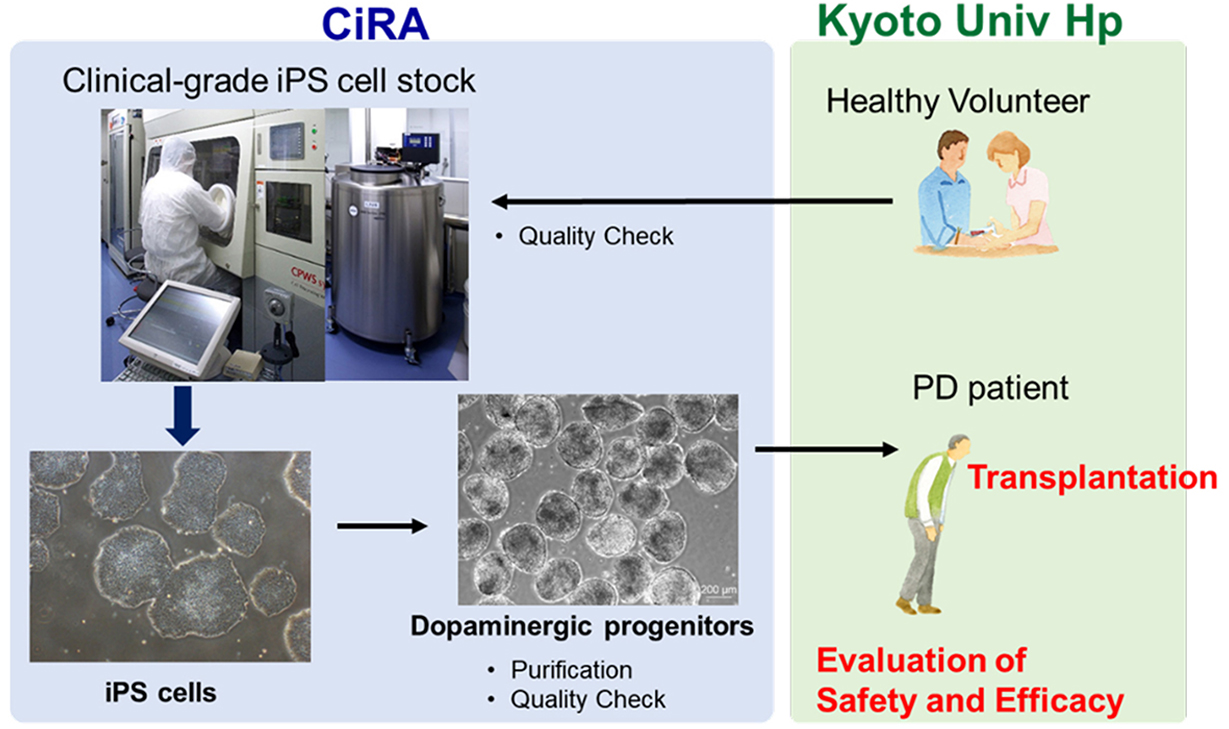
Roles in the clinical trial
Understanding Parkinson’s Disease
Parkinson’s disease is a progressive disorder that commonly affects people over the age of 50. About 290,000 people are estimated to live with the disease in Japan. Major symptoms include tremors, muscle stiffness, and slowed movement.
The disease is caused by the loss of dopamine-producing brain cells, leading to a decrease in dopamine levels and the onset of various symptoms.As the disease progresses, medications become less effective, and side effects such as dyskinesia (involuntary movements) may occur.
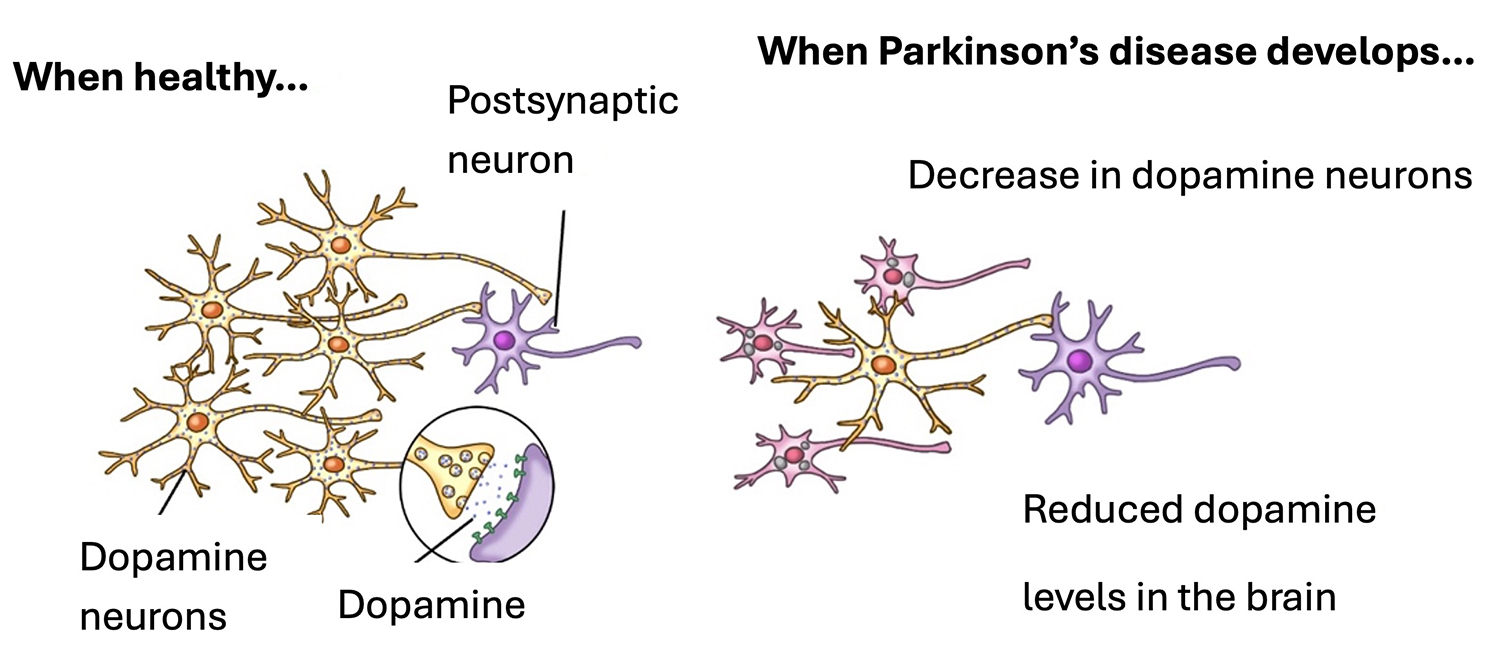
What happens inside the brain of a Parkinson’s disease patient
Current Treatments
In the early stages of the disease, symptoms can be managed by taking L-DOPA, a dopamine precursor, which allows neurons to produce dopamine and alleviate symptoms. However, as the disease progresses and more dopamine-producing neurons are lost, the medication becomes less effective. Therefore, there has been a growing interest in cell therapy to replace those lost neurons.
The Promise of Cell Therapy
The root cause of Parkinson’s disease is the loss of dopamine neurons. Researchers have long explored the idea that transplanting these neurons could cure the disease. In Europe, studies were conducted using fetal brain tissue to extract and transplant neurons into patients. Although these transplanted cells survived for many years and showed promise, ethical concerns about using fetal tissue, difficulties in sustainably obtaining sufficient cells, and side effects such as dyskinesia remained challenging. While the potential of cell therapy was demonstrated, new sources of cells were desperately needed.
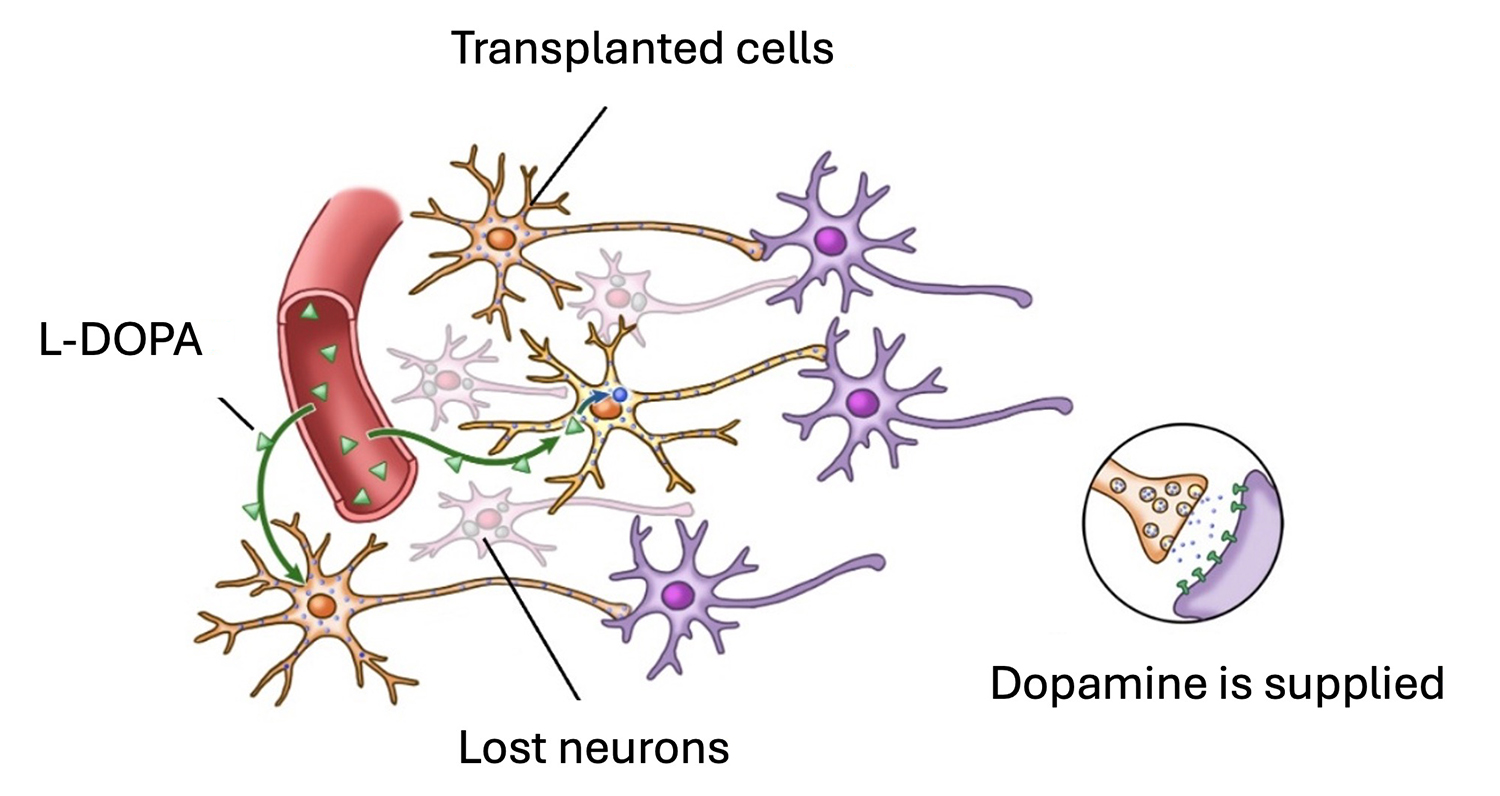
Transplanted cells compensate for the lost dopaminergic neurons
Professor Jun Takahashi’s Research
Takahashi began researching neural regeneration as a graduate student. In 1995, while studying at the Salk Institute in the U.S., he witnessed the announcement of the discovery of neural stem cells. In 1998, the creation of human embryonic stem (ES) cells , which have the ability to differentiate into any type of cell in the body, was reported. In 2000, the late Professor Yoshiki Sasai at Kyoto University developed a method to induce dopamine neurons from mouse ES cells, and in 2003, Professor Norio Nakatsuji at the university established human ES cells in Japan. These developments laid the groundwork for neural regeneration research using ES cells.
However, at that time in Japan, it remained difficult to use human ES cells for research. Since some people felt resistance to generate therapeutic cells from fertilized embryos, alternative sources of cells were being sought.
The Possibilities Opened Up by iPS Cells
In 2006, Professor Shinya Yamanaka and his team at Kyoto University announced the creation of iPS cells—cells with the same properties as ES cells but without using embryos. Initially developed from mouse cells, human iPS cells were successfully created in 2007. Building on his previous research with ES cells, Takahashi quickly developed an efficient method to induce dopamine neurons from iPS cells.
Building Safety and Efficacy Data
Simply creating dopamine neurons, however, is not enough for a new therapy. If cells other than the intended dopamine neurons are mixed in, they might behave abnormally and cause harmful side effects. To address this, the team developed a method to selectively isolate dopamine neurons, enhancing safety (CiRA News, March 7, 2014).
These cells were successfully transplanted into monkeys with Parkinsonian symptoms, where they produced dopamine and improved motor function (CiRA News, August 31, 2017). Further safety testing using clinical-grade iPS cells confirmed stable functionality and no abnormal growth (CiRA News, July 6, 2020).
After thorough preparations, a physician-led clinical trial aiming to treat Parkinson’s disease with iPS cell–derived dopamine neurons was launched at Kyoto University Hospital in 2018 (CiRA News, July 30, 2018).
Details and Results of the Clinical Trial
This clinical trial was conducted with seven Parkinson’s disease patients aged 50–69. Each received 5 million or 10 million dopamine neurons transplanted into both sides of the brain, followed by a two-year observation period. Notably, no serious side effects were observed during the monitoring period.
Furthermore, MRI scans showed no abnormal cell proliferation. Among six patients evaluated for efficacy, four showed improvements in their MDS-UPDRS Part III scores, a standard measure of Parkinson’s symptoms, when off medication. PET scans confirmed that the transplanted cells continued producing dopamine even two years after transplantation.
The results suggest that transplanting iPS cell-derived dopamine neurons is safe and potentially effective to treat Parkinson’s disease.
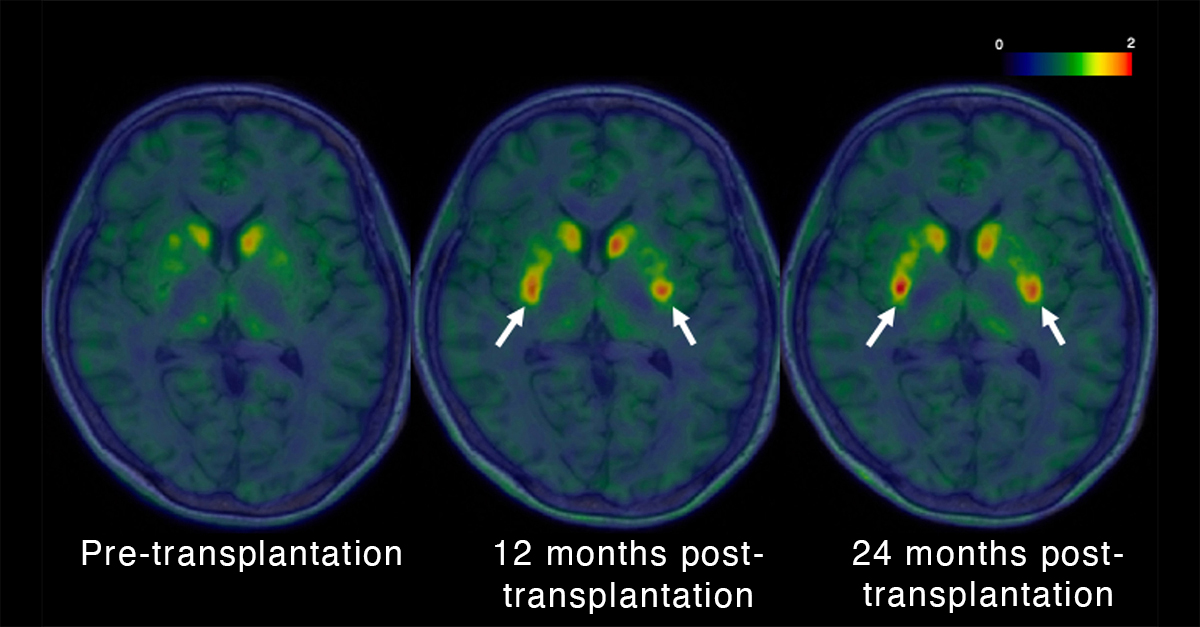
PET imaging confirmed Dopamine production by the transplanted iPS cell-derived dopaminergic neurons (arrows)
Next Steps
Sumitomo Pharma Co., Ltd. is preparing to apply for government approval for manufacturing and sales in Japan※1. In the U.S., a physician-led clinical trial for Parkinson’s disease using iPS cells began at the University of California, San Diego in November 2023 (CiRA News, December 26, 2023).
Takahashi remains committed to improving the therapy, saying, "Even though I am a researcher, I still think like a clinician—curing patients is the most important goal. I am grateful to the patients who participated in the trial and very pleased that some showed improvement. I will continue working hard to deliver this new treatment to patients as soon as possible."
※1: Sumitomo Pharma applied for the government approval on August 5, 2025.
-
Written by Hiroyuki Wadahama Ph.D.
Science Communicator, CiRA International Public Communications Office
(Translation: Kelvin Hui Ph.D., CiRA Research Promoting Office)