






CiRA Reporter
CiRA Reporter

Focus
June 12, 2026
Bringing Regenerative Therapy for Knee Cartilage to Patients
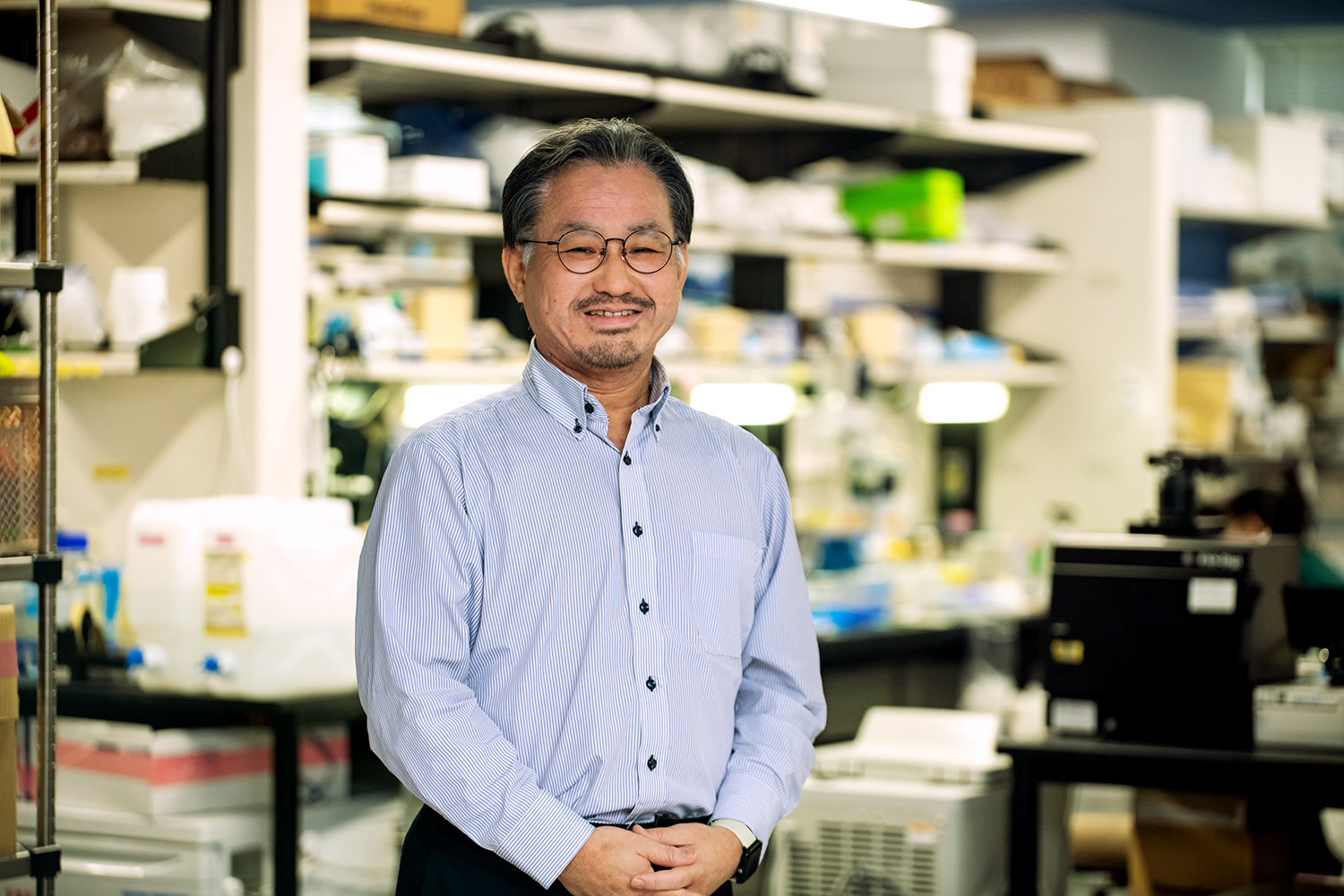
Associate Professor Makoto Ikeya
External Director(※),
Arktus Therapeutics Co., Ltd.
Why did you decide to launch a startup company?
In our laboratory, we have developed mesenchymal stem cells derived from iPS cells (iMSCs) ※1)※1) Mesenchymal stem cells (iMSCs) derived from iPS cells
Mesenchymal stem cells are a type of stem cell found in the adult body with the ability to differentiate into bone, cartilage, fat, and other tissues. Those induced from iPS cells are called iPS cell-derived mesenchymal stem cells. via neural crest cells※2)※2) Neural crest cells
Cells that appear temporarily during development and differentiate into various cell types. They are also referred to as the fourth germ layer.. Using these cells, we successfully generated high-quality progenitor cells for knee cartilage. In collaboration with Professor Koichi Nakayama from Saga University, who developed a 3D bioprinting technology, referred to as the "Kenzan" method, we advanced our research to the point of fabricating centimeter-scale cartilage-like tissues.
When this cartilage-like tissue was transplanted into pig knees with cartilage defects, we confirmed engraftment after three months along with restoration of normal gait, which represents the preclinical proof of concept (POC). However, reaching this stage already required substantial funding, and operating at the laboratory level alone was extremely challenging.
To advance to a stage suitable for human use, far higher hurdles remain, including establishing GMP-compliant manufacturing systems, engaging with regulatory authorities, and reducing costs for commercialization. Achieving preclinical POC gave us a sense that we had pushed academic research as far as it reasonably could go. The next phase―clinical translation―requires specialized personnel, organizational structures, and large-scale funding that a single laboratory simply cannot sustain. That is why founding a startup company became the only viable path forward.
How did you go about launching the startup?
For nearly a decade, Professor Nakayama and I had discussed our shared desire to translate this research into clinical practice. We applied for public research funding to support clinical translation, but it was difficult to come by.
A major turning point came when our project, titled "Commercialization of iPS Cell-Derived Cartilage," was selected for Kyoto University’s startup incubation program. Through repeated consultations with Kyoto University Innovation Capital Co., Ltd. (Kyoto-iCAP), we received guidance on fundraising strategies and step-by-step company formation. As a result, we at last established the company in 2023.
What technologies are you aiming to implement as real-world applications?
Our goal is to generate knee cartilage cells from iPS cells and develop products that are effective for conditions such as knee osteoarthritis. This approach allows us to replace damaged cartilage precisely at the affected sites. Because the tissue is derived from human cells, it integrates well with native knee tissue and could help patients maintain higher levels of physical activity, including sports.
Currently, patients with severe knee damage often have only two options: joint replacement surgery or enduring pain. We aim to introduce a third option that sits between these extremes.
What is your role in the startup?
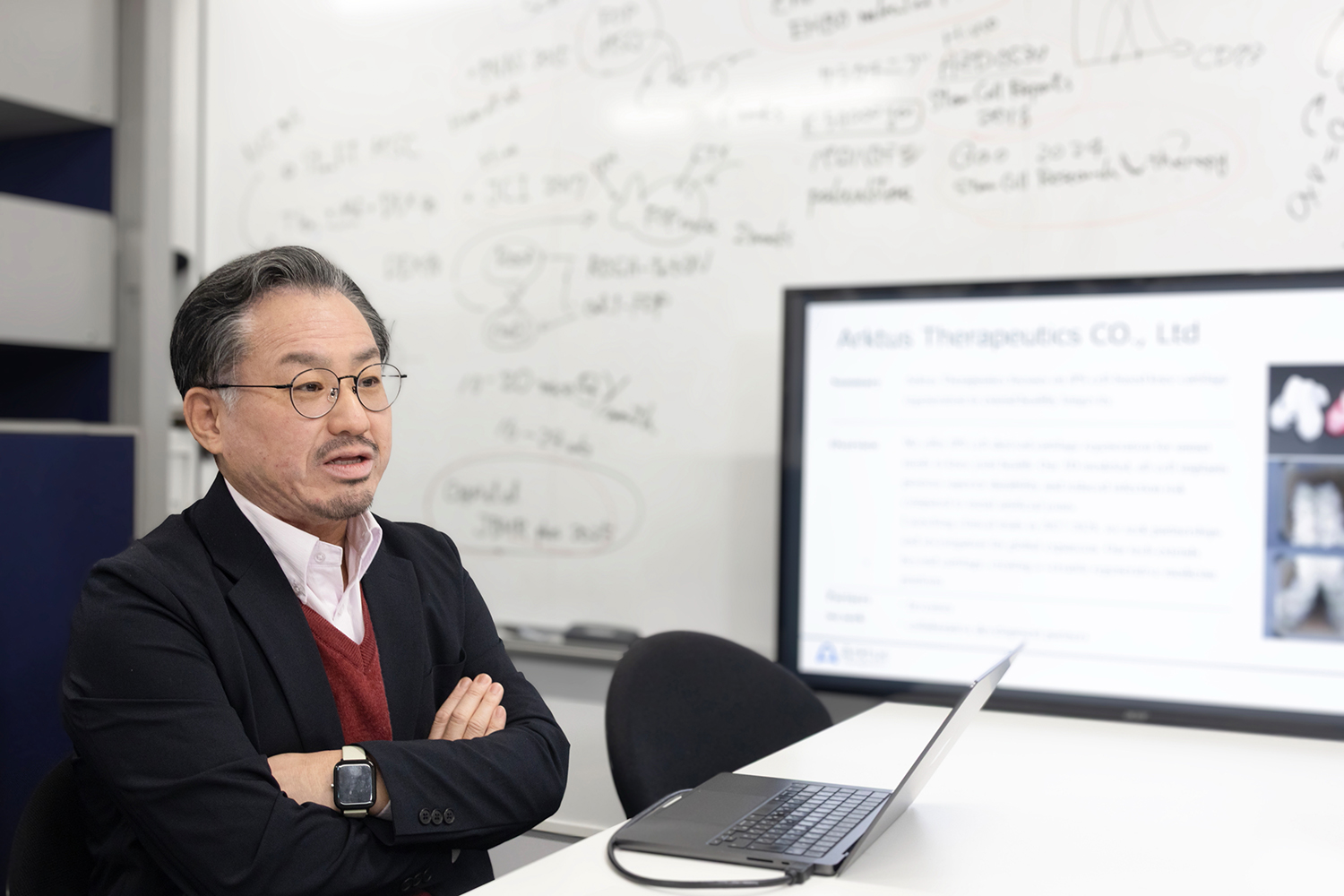
I serve as an External Director. Externally, I explain the scientific foundations of the technology to investors and other stakeholders. Internally, I provide technical advice to facilitate the transfer of know-how established in academia to the company.
According to Kyoto University regulations, it is difficult for researchers such as myself to serve as company president while retaining a university position. Therefore, a CEO introduced through Kyoto-iCAP now leads the company. Final decision-making is entrusted to the CEO and management team, while I focus on supporting the startup from a technical and academic perspective.
How do you balance research and startup activities, and what are the challenges and rewards?
So far, I feel that balancing research and startup activities has gone relatively well. The startup-related work accounts for about 10–20% of my time, with research remaining as my primary responsibility.
My startup work includes weekly meetings on technology, regulatory strategy, and fundraising, as well as reviewing meeting minutes and reports. When necessary, I also participate in meetings with investors. In both the laboratory and the company, I am supported by reliable team members, allowing me to engage meaningfully at key points without becoming overburdened. While organizational growth inevitably brings challenges such as managing interpersonal relationships, these are universal issues faced by any growing organization.
What challenges did you face when founding―and after founding―the startup?
One of the most difficult tasks was selecting a CEO, which took considerable time. Ultimately, through consultation with Kyoto-iCAP, we were introduced to an ideal candidate―an alumnus of Kyoto University’s Faculty of Medicine with experience as a management consultant―who now serves as our CEO.
It also took time to assemble trusted experts in regulatory affairs, auditing, manufacturing, and quality control, as well as to establish the facilities necessary for advancing research and development. We relied heavily on introductions to specialists with the required expertise.
What do you hope to achieve going forward?
We plan to initiate first-in-human clinical trials around 2027, with regulatory approval and clinical use targeted for around 2030. These timelines represent a best-case scenario and may change depending on regulatory interactions and trial outcomes, but the entire team is united in working steadily toward these goals.
(※) Note: According to Kyoto University guidelines on external employment, faculty members may serve as officers of companies leveraging their research findings with university approval, provided that such activities do not exceed eight hours per week.
Glossary
※1) Mesenchymal stem cells (iMSCs) derived from iPS cells
Mesenchymal stem cells are a type of stem cell found in the adult body with the ability to differentiate into bone, cartilage, fat, and other tissues. Those induced from iPS cells are called iPS cell-derived mesenchymal stem cells.
※2) Neural crest cells
Cells that appear temporarily during development and differentiate into various cell types. They are also referred to as the fourth germ layer.
-
Interviewed and written by Yoko Miyake
Science Communicator, CiRA International Public Communications Office
(Translation: Kelvin Hui Ph.D., CiRA Research Promoting Office)