



Research Activities
Research Activities
Principal Investigators


Dept. of Life Science Frontiers
Mio Iwasaki (Junior Associate Professor)
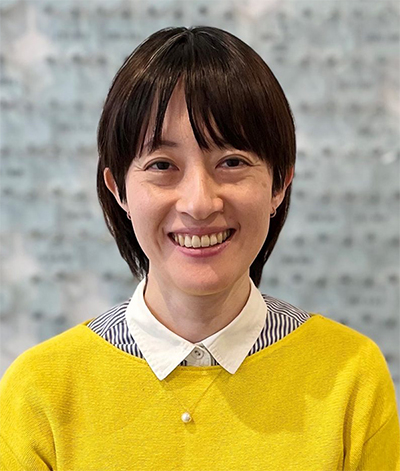
Mio Iwasaki Ph.D.
- Lab Website
- Research Progress in FY2024
- Contact: iwasaki-g*cira.kyoto-u.ac.jp
- Please change * to @
Research Overview
Our bodies are composed of cells with diverse functions. At what molecular level are these functional differences determined?
Within cells, genetic information stored in DNA is transcribed into RNA, which is then translated into proteins. Ultimately, proteins are the principal effectors directly responsible for cellular structure and function. However, because advances in comprehensive analytical technologies were long led by transcriptome analysis, cellular states and identities have largely been characterized based on RNA abundance.
In recent years, it has become increasingly clear that RNA levels do not necessarily correlate with protein abundance. Furthermore, hierarchical regulatory mechanisms, including intracellular protein localization, post-translational modifications, and protein complex formation, play critical roles in determining cell-type-specific functions. Therefore, a quantitative and systematic understanding of proteins is essential for uncovering the fundamental mechanisms underlying cellular function.
We are developing highly accurate and reproducible proteomic technologies and applying these platforms to elucidate the principles governing protein abundance and the regulation of protein translation and degradation, particularly in pluripotent stem cells. Pluripotent stem cells, including induced pluripotent stem cells (iPS cells), retain the same genome while possessing the ability to differentiate into a wide variety of cell types. This makes them an ideal model system for investigating the fundamental principles governing molecular abundance control.
We are currently working on the following research topics:
- Identification of genes exhibiting marked discrepancies between RNA and protein abundance and elucidation of the mechanisms underlying their regulation
- Analysis of the relationship between alterations in ribosome-associated protein abundance and the mechanisms underlying rare diseases
- Development of protein identification and quantification methods with enhanced sensitivity and proteome coverage
- Quantitative analysis of the absolute abundance and stoichiometric ratios of protein complexes
- Analysis of how post-translational modifications of the nuclear pore complex affect mRNA localization and translation efficiency
- Development of single-cell proteomics methods
Ultimately, by integrating multi-layered molecular information, including DNA, RNA, proteins, and metabolites, and reconstructing these data into quantitative, spatial, and temporal networks, we aim to establish an integrative framework capable of describing cellular and tissue state transitions at the molecular level.