




CiRA Reporter
CiRA Reporter

Focus
January 26, 2026
Special Feature: Surveying 116 CiRA Researchers and Students!
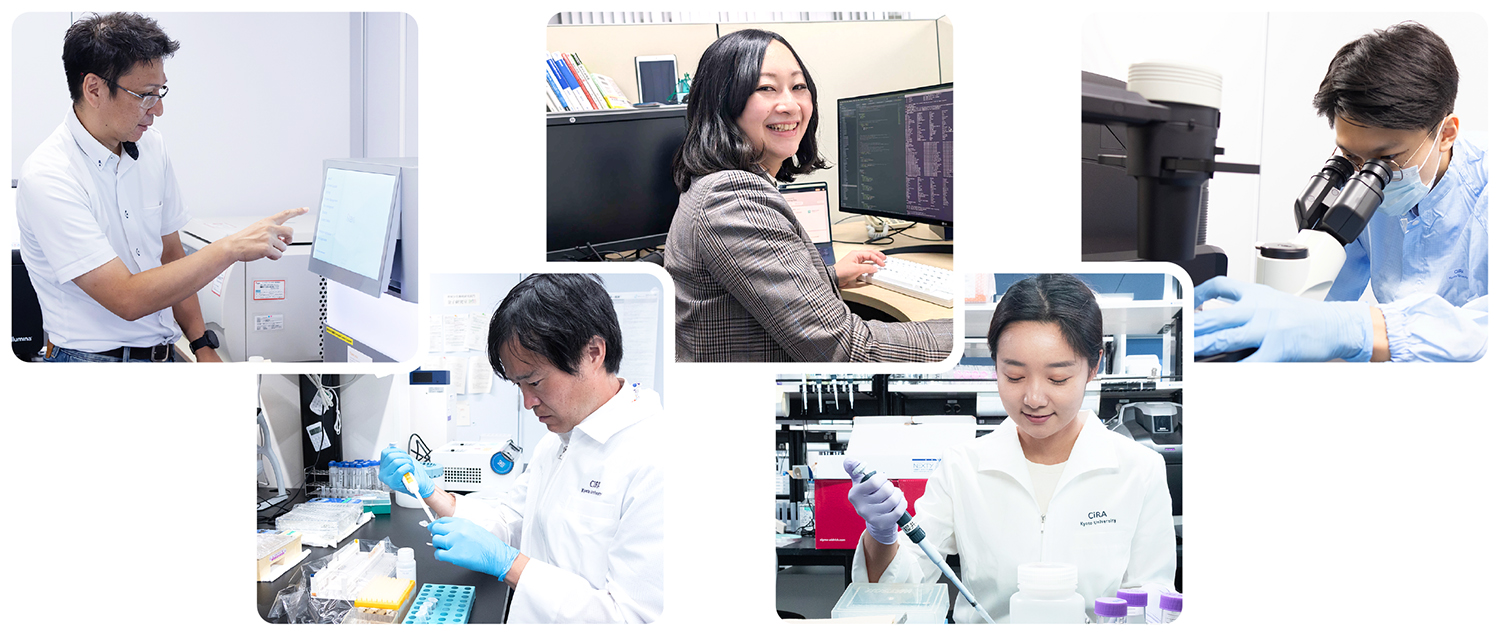
What drives the researchers and students who dedicate themselves to their work at CiRA every day? To find out, we targeted 297 individuals for this survey between July 22 and August 1, 2025. In total, we received responses from 116 participants, comprised of 73 researchers (faculty and research staff) and 43 graduate students. We gathered candid opinions on why they chose CiRA, the rewards and challenges of research, and CiRA’s strengths and areas for improvement. Through these survey results and interviews with five respondents, we hope you can glimpse into their passion for research and life at CiRA.
About the respondents


Such diverse academic backgrounds and regions!
When you think about CiRA researchers, you might assume they all come from medical schools. In reality, their academic backgrounds are highly diverse, and they bring together different areas of expertise. Respondents also hail from all over Japan and various countries worldwide. One comment noted, "CiRA is attractive because it allows interactions and collaborations with researchers from other fields." This diversity fosters new ideas and broadens research horizons.


Why did you choose to pursue research at CiRA?

When asked why they selected CiRA, both researchers and students frequently mentioned wanting to conduct basic research using iPS cells, aiming for clinical applications, or engaging in drug discovery. The desire to create new treatments was a principal driver. The excellent research environment, including well-equipped facilities and sufficient funding, was also an impactful factor. Many students highlighted faculty as a key influence, including comments such as, "I was drawn to a particular professor." or "I wanted guidance from a female PI who could serve as a role model."
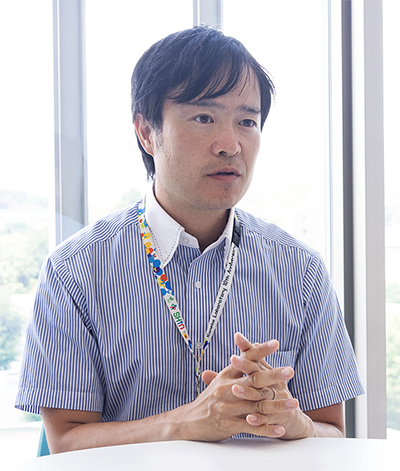
"Regenerative medicine using iPS cells holds tremendous potential for curing diseases. The Kaneko Laboratory is advancing research on cancer treatment using iPS cell-derived immune cells, some of which have already entered clinical trials. I decided to join CiRA because I wanted to contribute to society by helping cancer patients. Developing treatments for patients is challenging and requires significant effort. Nevertheless, the goal of ‘creating therapies that truly help patients’ is my greatest driving force."
"Regenerative medicine using iPS cells holds tremendous potential for curing diseases. The Kaneko Laboratory is advancing research on cancer treatment using iPS cell-derived immune cells, some of which have already entered clinical trials. I decided to join CiRA because I wanted to contribute to society by helping cancer patients. Developing treatments for patients is challenging and requires significant effort. Nevertheless, the goal of ‘creating therapies that truly help patients’ is my greatest driving force."
When do you feel research is rewarding or exciting?

The most common response was "When I make a discovery." The sense of achievement after repeated failures and the thrill of unexpected results were major motivators. Other comments included "When I realize my findings might contribute to society" and "When discussions spark new ideas." Students also mentioned personal growth, such as mastering new experimental techniques.

"I find research incredibly stimulating when I make a discovery—especially when an unexpected finding leads to new insights. I was greatly encouraged by something my former advisor once told me: 'When you discover something in research, you might be the first person in the world to know it.' Knowing that my work could one day be applied clinically is also a great source of motivation. This feeling has grown even stronger since May, when I joined CiRA and started working at the forefront of clinical applications."
"I find research incredibly stimulating when I make a discovery—especially when an unexpected finding leads to new insights. I was greatly encouraged by something my former advisor once told me: 'When you discover something in research, you might be the first person in the world to know it.' Knowing that my work could one day be applied clinically is also a great source of motivation. This feeling has grown even stronger since May, when I joined CiRA and started working at the forefront of clinical applications."
What do you find challenging about research?

Researchers often expressed concerns about insufficient long-term funding and the heavy burden of administrative tasks, coupled with pressure to produce consistent results. Many also noted inadequate employment opportunities and salaries. Students, on the other hand, most frequently cited frustration when experiments do not progress as planned.

"Researchers are, in many ways, like freelancers. We must decide what to study next, with whom to collaborate, how to translate their findings into societal benefits, and how to secure research funding—all on their own, taking full responsibility for these choices. Work-life balance is also part of this equation. Researchers need to determine how much time to devote to household responsibilities or childcare and how much to invest in research, all while striving to produce results. On the other hand, one of the greatest joys of being a researcher is the ability to dive fully into projects that truly spark your interest. The incredible sense of accomplishment when your efforts finally take shape is unmatchable."
"Researchers are, in many ways, like freelancers. We must decide what to study next, with whom to collaborate, how to translate their findings into societal benefits, and how to secure research funding—all on their own, taking full responsibility for these choices. Work-life balance is also part of this equation. Researchers need to determine how much time to devote to household responsibilities or childcare and how much to invest in research, all while striving to produce results. On the other hand, one of the greatest joys of being a researcher is the ability to dive fully into projects that truly spark your interest. The incredible sense of accomplishment when your efforts finally take shape is unmatchable."
What’s good about CiRA for research?
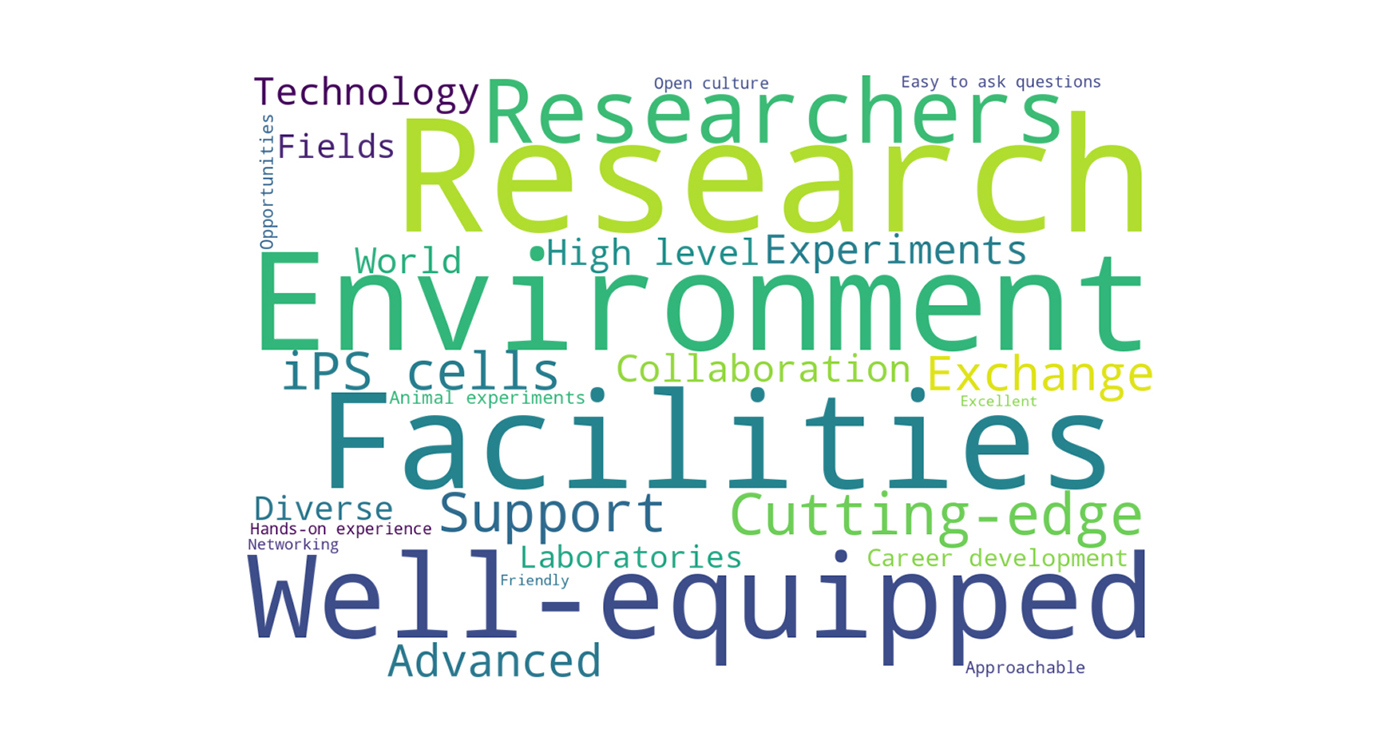
※This figure is a word cloud in which words that appeared more frequently
in the survey responses are displayed in larger text.
The overwhelming majority praised the well-equipped research environment and advanced facilities—one of CiRA’s greatest strengths. Respondents also valued opportunities for interdisciplinary exchange and discussions with outstanding researchers. Additional positives included strong research support systems and an open, collaborative atmosphere with events that encourage interaction.
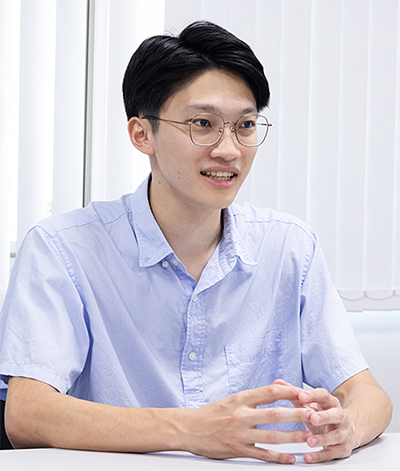
"CiRA offers an environment where you can easily interact with people from diverse backgrounds. My specialty is cell biology, but here at CiRA, I can interact with clinicians and researchers skilled in informatics and programming—fields completely different from my own. Exposure to other fields and perspectives is incredibly valuable.
CiRA is also well-equipped, and the support from the Common Equipment Management Office has been a tremendous help. For example, even when using unfamiliar instruments, the facility staff provides thorough guidance, making it easy to take on new types of analysis. Such assistance lowers the barrier to trying new experiments and creates a sense of security—knowing that experts are available to help. As a result, I feel that CiRA provides an environment where I can actively explore areas beyond my own expertise."
"CiRA offers an environment where you can easily interact with people from diverse backgrounds. My specialty is cell biology, but here at CiRA, I can interact with clinicians and researchers skilled in informatics and programming—fields completely different from my own. Exposure to other fields and perspectives is incredibly valuable.
CiRA is also well-equipped, and the support from the Common Equipment Management Office has been a tremendous help. For example, even when using unfamiliar instruments, the facility staff provides thorough guidance, making it easy to take on new types of analysis. Such assistance lowers the barrier to trying new experiments and creates a sense of security—knowing that experts are available to help. As a result, I feel that CiRA provides an environment where I can actively explore areas beyond my own expertise."
What are the challenges at CiRA?
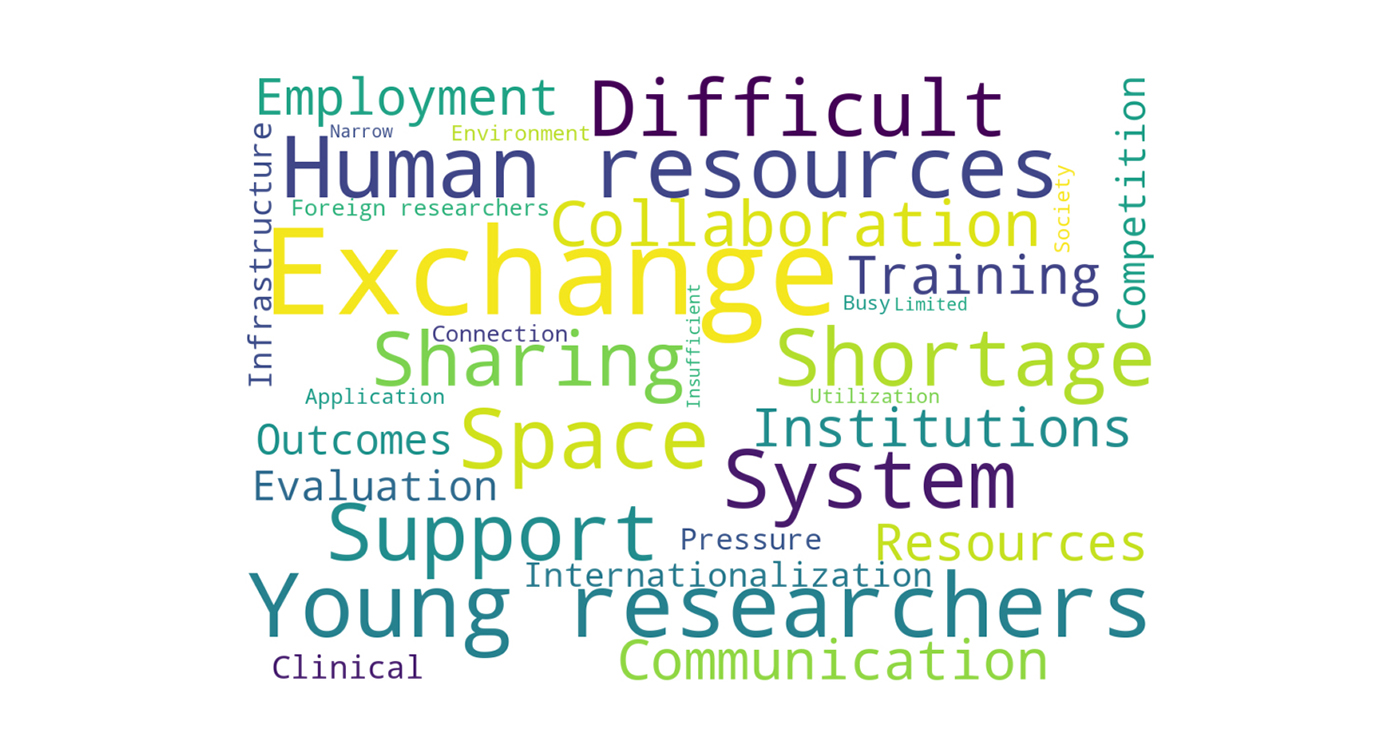
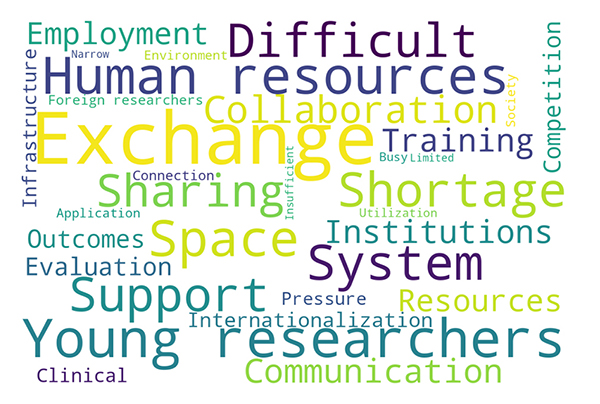
The most common concern was insufficient interaction between labs. Daily communication is limited, and opportunities for collaboration and information exchange are underutilized. Suggestions included organizing inter-lab events and hosting casual seminars or social gatherings similar to those at research institutions abroad. In the previously mentioned items, although some respondents gave high marks to research exchange opportunities, there is still room for improvement.
Other issues raised included improving systems to nurture the next generation and offering insufficient support for young researchers and students. Some respondents also called for greater internationalization and expansion into new research areas to attract global talent and advance iPS cell research.
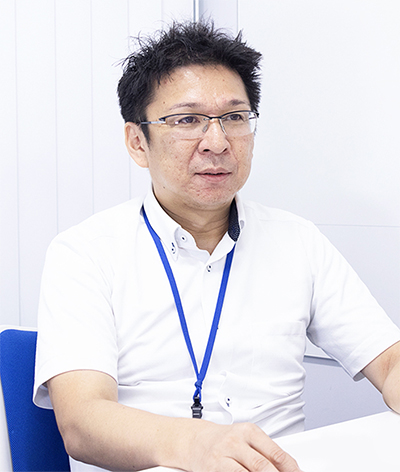
"While improvements have been made to the working conditions of research support staff at CiRA, overall, they are still insufficient, and further enhancement is needed. For example, individuals with advanced skills in data analysis and programming often receive better compensation in the industry, making it difficult for universities and research institutes to secure such talent. Yet, these professionals are critically important for advancing research in modern medicine and biology. Therefore, it is essential to create an attractive workplace—not only by improving salaries but also by offering a supportive environment and flexible work arrangements. Better working conditions will not only help retain excellent research support staff but also encourage young talent to continue on the academic path and lead the future."
"While improvements have been made to the working conditions of research support staff at CiRA, overall, they are still insufficient, and further enhancement is needed. For example, individuals with advanced skills in data analysis and programming often receive better compensation in the industry, making it difficult for universities and research institutes to secure such talent. Yet, these professionals are critically important for advancing research in modern medicine and biology. Therefore, it is essential to create an attractive workplace—not only by improving salaries but also by offering a supportive environment and flexible work arrangements. Better working conditions will not only help retain excellent research support staff but also encourage young talent to continue on the academic path and lead the future."
Future outlook


What were you interested in as a child, and what did you focus on most during your secondary school and university years?
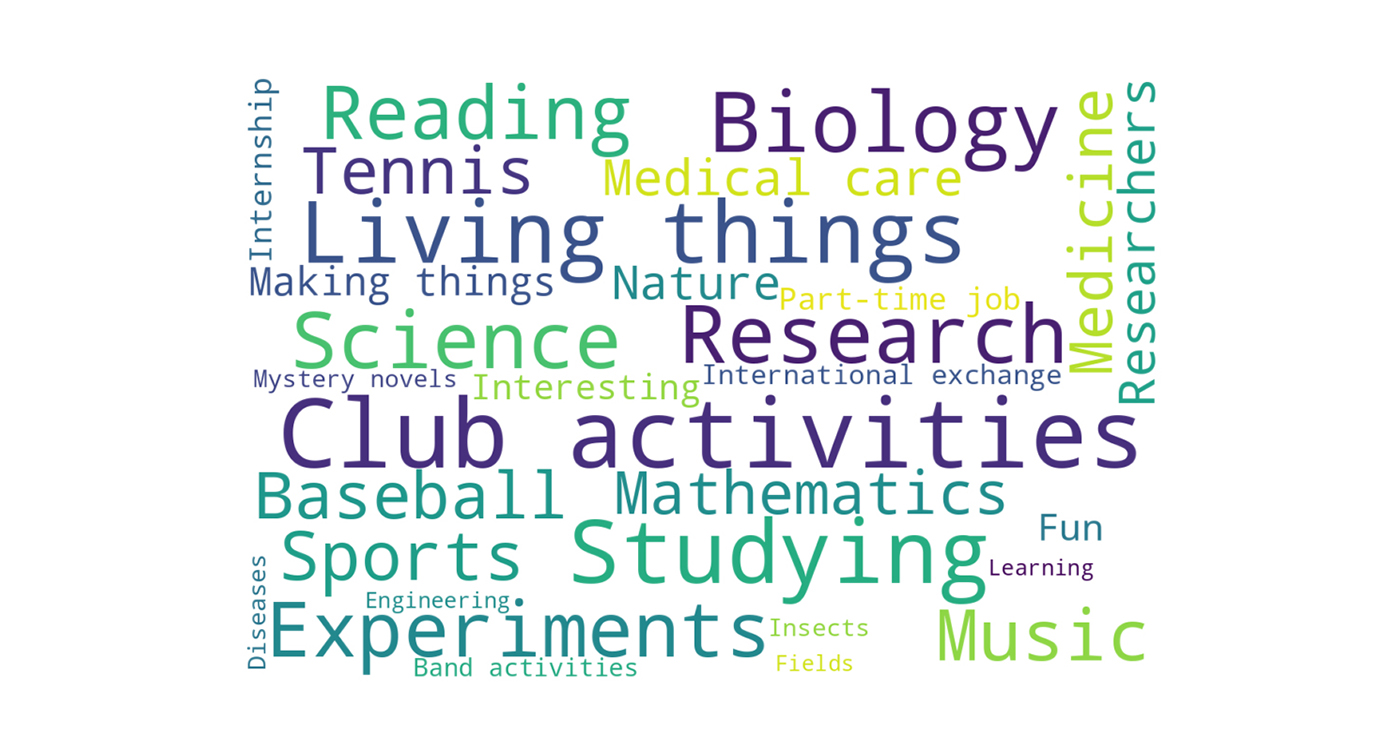
Many respondents were interested in nature, animals, or sports as children, and focused on club activities and academics during their school years. Discovering the excitement of science in university inspired them to pursue research careers.
Hobbies and ways to refresh
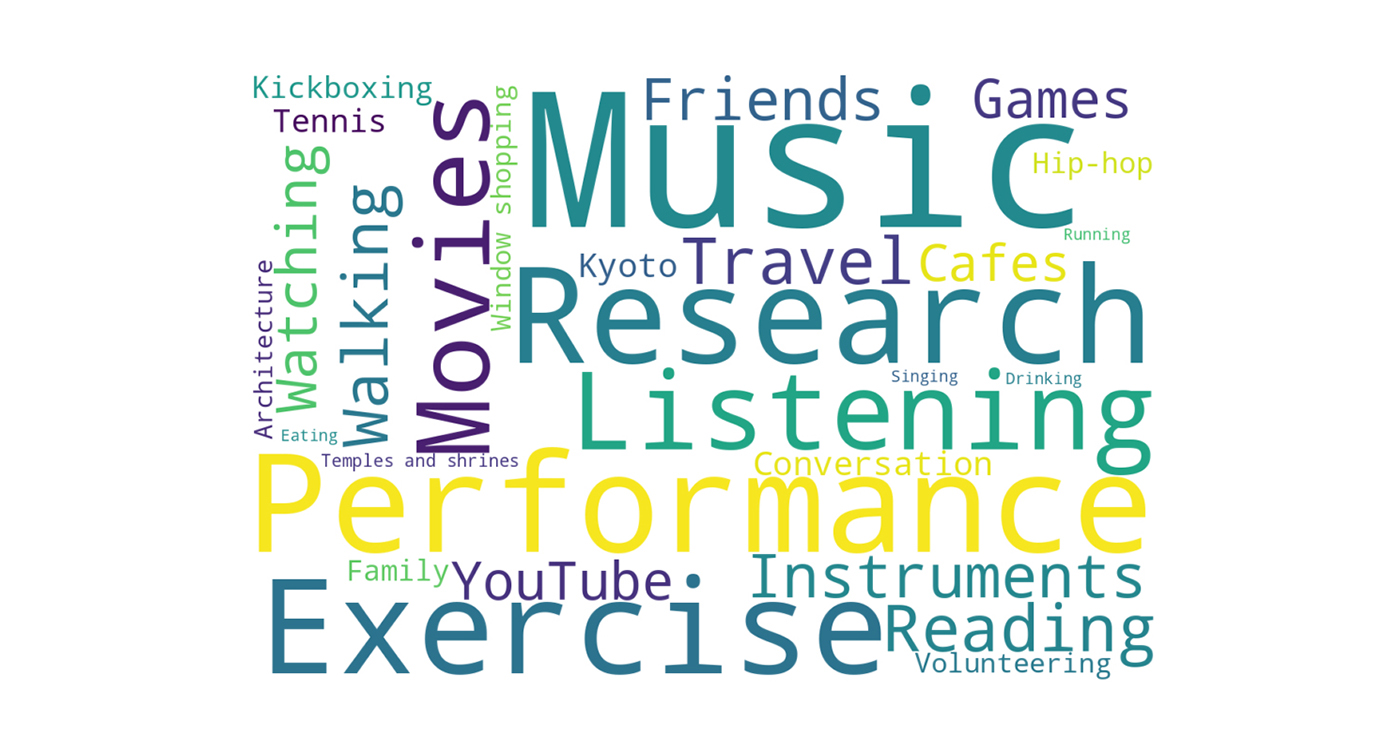
Physical exercise, such as running, walking, swimming, strength training, and tennis, was the most popular activity for survey respondents. Music-related hobbies ranked second, including singing in choirs, playing piano or guitar, and attending concerts. Some even said research itself was their hobby.
Messages for those who want to pursue research at CiRA
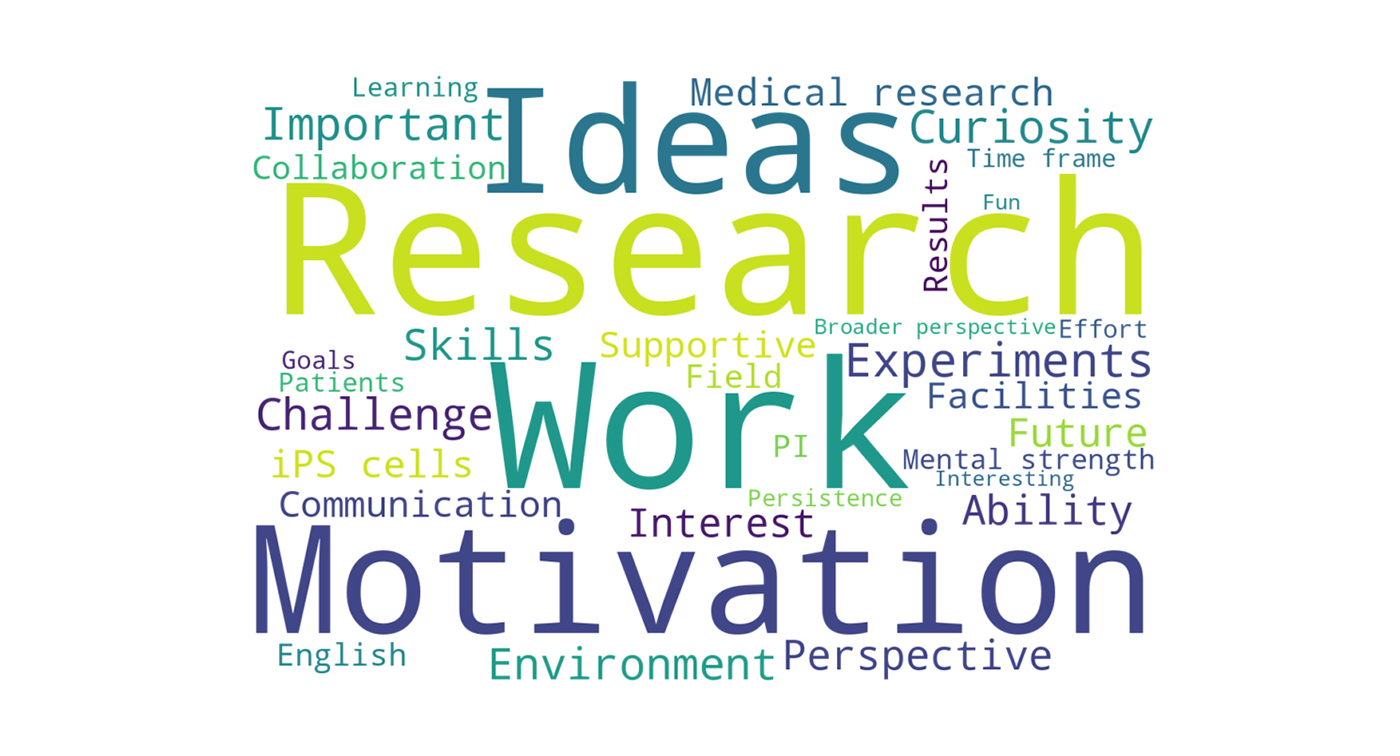
The most frequent advice was "Stay curious." Curiosity and inquisitiveness drive research forward. Another common message was "Ideas are everything." To make groundbreaking discoveries, originality is essential. Respondents also emphasized perseverance, motivation, and English proficiency for success in international settings.
Selected messages:
- To succeed as a researcher, you need curiosity, creativity, problem-solving skills, persistence, and communication ability. A good mentor and environment are also crucial. If CiRA’s research interests you, take the first step and pursue your dream of becoming a researcher.
- Maintaining motivation is most important—cherish your determination to achieve your goals.
- Research often doesn’t go as planned, so staying positive is key. Approach challenges with a "let’s try it!" attitude.
- Special techniques aren’t necessary—what matters most is passion.
- iPS cell research takes time, so patience and persistence are vital. When experiments don’t go as expected, that’s when you need to push through.
- Ideas are the most important. Think about what’s needed to realize your idea, then take initiative to make it happen.
- Cross-disciplinary and cross-cultural communication skills are essential, along with conducting research that contributes to CiRA’s vision for the future.
- This research can change the future of medicine—always keep patients in mind as you pursue your work.
※Word cloud analysis was performed using UserLocal AI Text Mining (in Japanese) and created by CiRA International Public Communications Office.
-
Surveyed, interviewed and written by Yoko Miyake
Science Communicator, CiRA International Public Communications Office
(Translation: Kelvin Hui Ph.D., CiRA Research Promoting Office)